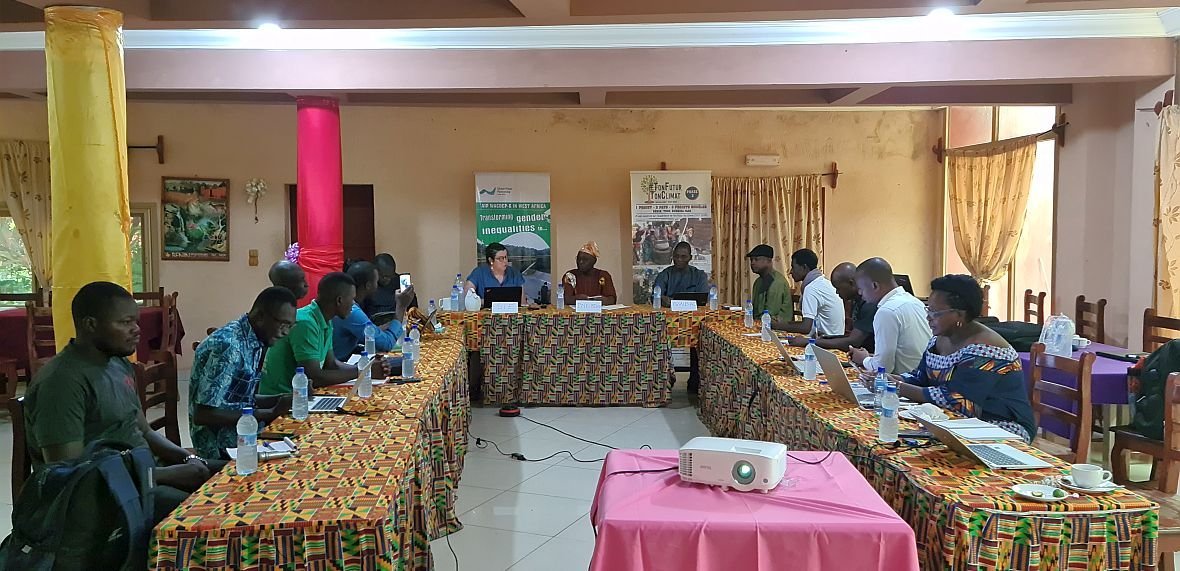
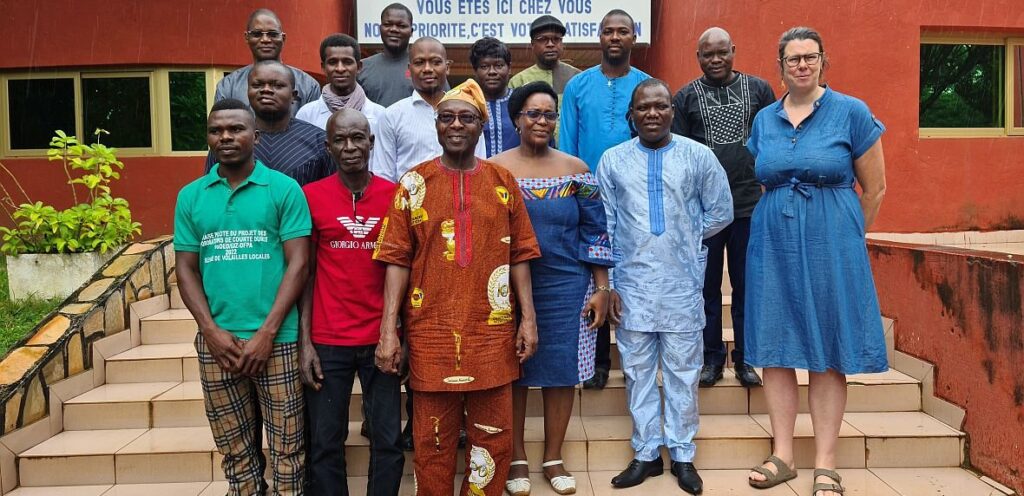
The meeting had three phases including taking stock of the implementation, a field visit and a regional training on composting and commercialization of food products.
Updating on the progress of the implementation, the mid-term results show:
In Benin:
– About fifty young people trained in composting and liquid fertilizer production
– 1,026 seedlings produced by the young people, which were used to reforest a school and a public space
– A 10 ha mango orchard identified and soon to be stocked with 2000 seedlings
– 10,000 forestry plants planted to restore the banks of the Tchoutchoubou River
– Equipment and materials were offered to the beneficiaries
– 2 tons of compost and 500 liters of liquid fertilizer were produced
– The young people drilled by TFTC were asked by the NGO Jura Afrique to train other young people in composting
There is a very good ownership of the project by the actors on the ground and a strong involvement of local and customary authorities as well as the deconcentrated services of the State.
In Burkina Faso, the results include:
– The construction of a 6 cubic meter/hour borehole with an immersed solar pump
– The establishment of a nursery with 15,000 plants of 30 different species
– The creation of a 200 m long hedge out of the 660 m planned
– The construction and operation of a 700 m2 vegetable garden (30 beds) for market gardening with the availability of the first products
– The distribution of equipment including pick hammers, picks, shovels and other accessories.
– A reforestation campaign is currently underway.
In Togo, we note:
– The mobilization of about 100 young people as well as local political and traditional authorities
– The training of 20 companies that have reached 500 young people and women through the relay of the training acquired.
– In the context of awareness raising:
– More than 2,000 people were reached through radio and group sensitization
– 20 journalists were trained on agroecology with the establishment of a media community
– 10 mayors of Togo sensitized on agroecology with the sharing of experiences of the mayors of Grand Kloto
– The development of an agro-ecology education manual for young people
– The organization of multi-actor community dialogues on food policies and agroecology in the communes
The implementation of an agroecological system has allowed:
– The realization and validation of a reference study with the identification of practical agroecological techniques as well as the stakeholders, including 20 groups of young people who benefited from advisory support
– The setting up of a multi-actor committee composed of different stakeholders
– The donation of materials and the organization of festivals.
– The gradual adoption of agro-ecological practices in the localities covered is noted.
– Depending on the country, the difficulties identified include
– Lack of appropriate compost production sites
– Climatic bad weather (wintering) slowing down the production of compost
– New activities with a financial impact that were not initially planned (training in commercial marketing, support for structuring the youth group), although these are essential for success
– The absence of a storage warehouse
– Some administrative red tape and difficulties in transmitting information on progress.