
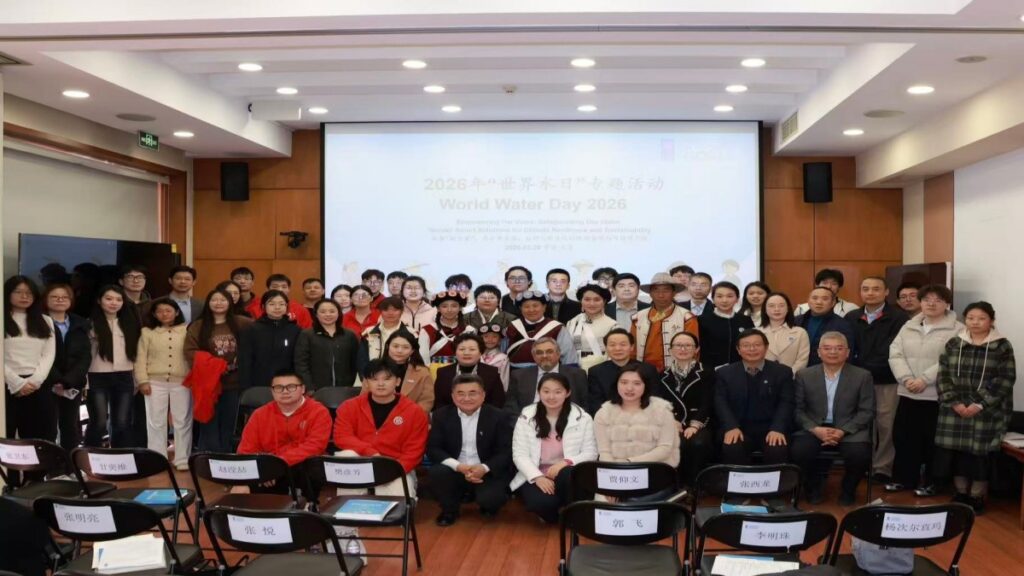
BEIJING, March 20, 2026 — On Friday, March 20, the United Nations Development Programme (UNDP) China, Global Water Partnership (GWP) China, and the International Cooperation and Exchange Committee of the Chinese Society of Hydraulic Engineering (CSSHE) jointly hosted a special event to mark the 2026 World Water Day. Held in Beijing with both in-person and virtual participation, the event convened over 70 guests from government bodies, research institutes, community organizations, and international partners to discuss the year’s theme: “Water and Gender.”
Opening Remarks and Keynote Addresses
The event commenced with opening remarks delivered by distinguished guests, including Mr. Vineet Bhatia, Senior Advisor at UNDP China; Ms. Ai Yinfang, Deputy Director of the China International Center for Economic and Technical Exchanges (CICETE), who addressed the audience via video link; and Mr. Hao Zhao, Director of the International Center for Economic and Technical Cooperation at the Ministry of Water Resources.
Integrating Gender Perspectives into Water Management
A focal point of the discussion was the practical application of gender perspectives in water resource management. Prof. Jia Yangwen, Regional Coordinator of GWP China, presented the experiences of the SDG 6.5.1 sub-project. This initiative has been exploring a comprehensive assessment framework for county-level water resource management in regions such as Jiahe in Hunan Province, Deqing in Zhejiang Province, and Chongzhou in Sichuan Province.
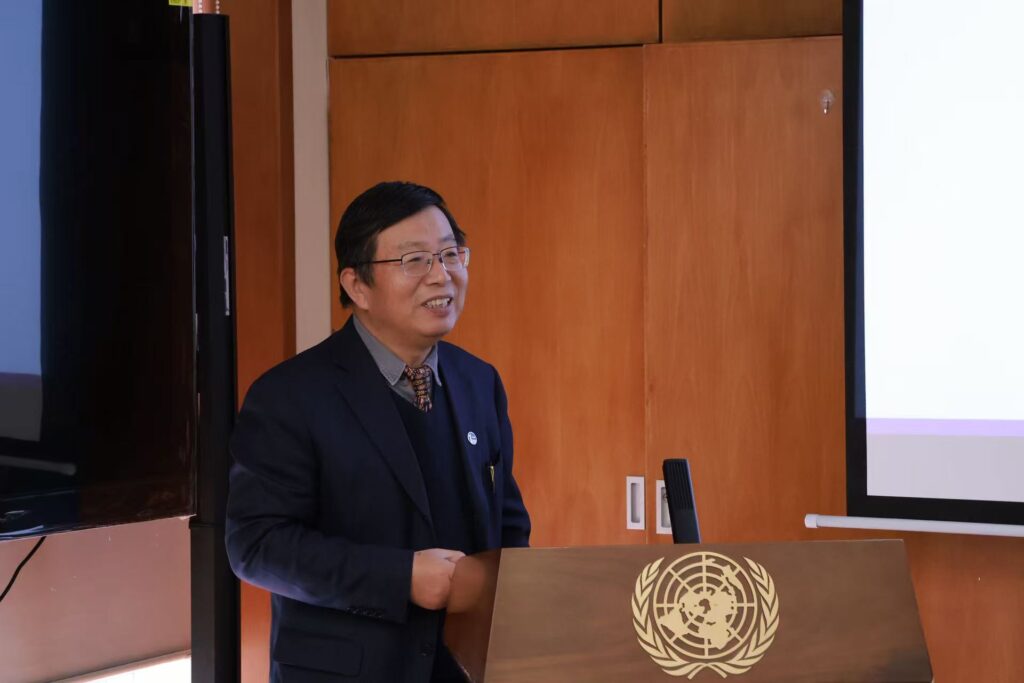
Prof. Jia Yangwen, Regional Coordinator, GWP China
Jia detailed how gender perspectives are integrated into evaluation indicators, specifically through the “Equitable Measures” metric. This indicator assesses whether counties have formulated water security policies that specifically address the needs of vulnerable groups and women.
From Beneficiaries to Active Participants
Highlighting the structural progress made in China, Jia emphasized that the country has achieved “de-gendered” water supply equity through the integration of urban and rural water supply systems. Looking toward the future, he called for a strategic shift in the role of women in water governance, urging stakeholders to empower women to transition from being merely “beneficiaries” to becoming active “participants” in decision-making and management processes.