How can countries capitalise on the formal SDG 6 monitoring process to design action and investment opportunities that accelerate progress towards climate-resilient water security?
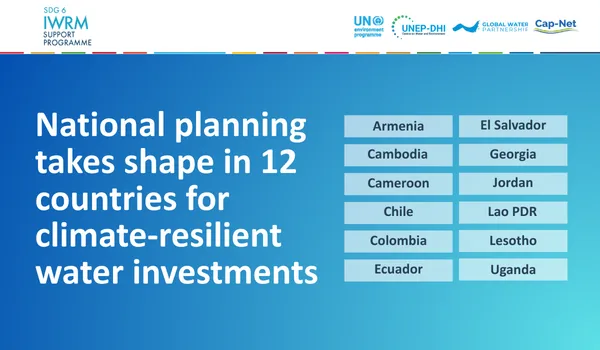
This year, twelve countries are undertaking multi-stakeholder processes to answer that question as they embark on national action planning, assisted by the SDG 6 IWRM Support Programme. This program is implemented by GWP in coordination with the UNEP-DHI Centre, under the leadership of UNEP.
The goal: To design actionable, investment-ready action plans that mobilise resources from national budgets, multilateral development banks, the private sector, and bilateral funders.
Diverse national approaches to advancing SDG 6
Each of the twelve countries participating in the Stage 2 process of the SDG 6 IWRM Support Programme — i.e. Armenia, Cambodia, Cameroon, Chile, Colombia, Ecuador, El Salvador, Georgia, Jordan, Lao PDR, Lesotho and Uganda — face a unique set of water and climate challenges and socio-economic conditions. Using the IWRM Action Planning Framework and the online IWRM Action Planning course, both developed by the Support Programme, as guidance for these high-impact multi-stakeholder commitments, these twelve countries are therefore approaching this opportunity in a diversity of ways. From Cameroon’s efforts to align climate-sensitive budgeting for water-related administrations with SDG 6-related priorities, to Armenia’s ambition to develop an integrated water-focused drought management plan, and El Salvador’s alignment of water and climate priorities with a water-themed Green Climate Fund (GCF) Readiness project, each country is leveraging the political momentum, stakeholder engagement and data points generated by reporting on SDG indicator 6.5.1 (which tracks the degree of implementation of Integrated Water Resources Management -IWRM), to identify opportunities to achieve a climate-resilient water future.
“The Stage 2 process in Jordan aims to be transformative for the country’s water future. We are facilitating a low-cost but high-impact process aiming to assist Jordan with establishing a National Water Investment Fund to ensure financial sustainability for IWRM initiatives.”— Dr. Anthi Brouma, Deputy Regional Coordinator of GWP-Med
The Stage 2 process of the SDG 6 IWRM Support Programme is directly aligned with the Global Transformation Agenda on climate-resilient water investments, which seeks to leverage USD 15 billion in investments by 2030. It also supports the new UN System-Wide Strategy on Water and Sanitation, and its Collaborative Implementation Plan, specifically outcome 2 on country-level support and outcome 4 on accelerated progress towards SDG 6, through the five SDG 6 global accelerators: financing, data and information, capacity development, innovation and governance.
Throughout the year, we will report on progress in these twelve countries through social media and through GWP’s newsletter (NewsFlow), as these plans take shape.
From Plans to Partnerships: Progress in Cambodia and Lao PDR
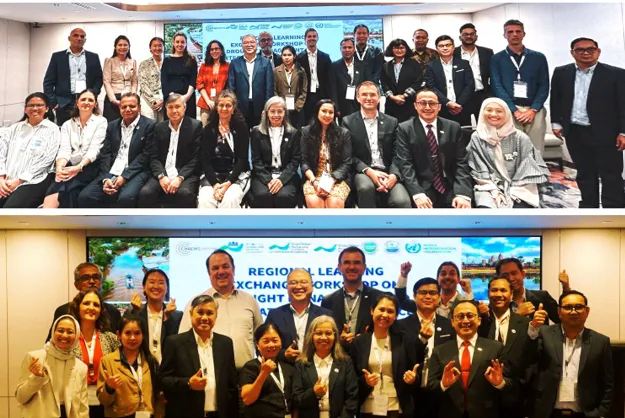
A recent highlight was the stakeholder workshop, co-organised with the World Meteorological Organization, for Cambodia and Lao PDR to present their draft IWRM Action Plans and Drought Management Plans for discussion. Participants identified synergies between the countries and, with regional and global development partners, explored how to align implementation of the plans with financial and technical support. Watch this space for more news on these transformative activities, which demonstrate the GWP network’s full potential to operate seamlessly with partners — from global to regional to national levels — in driving progress toward a water secure and climate-resilient future.
New Countries join the push for investment-ready water plans
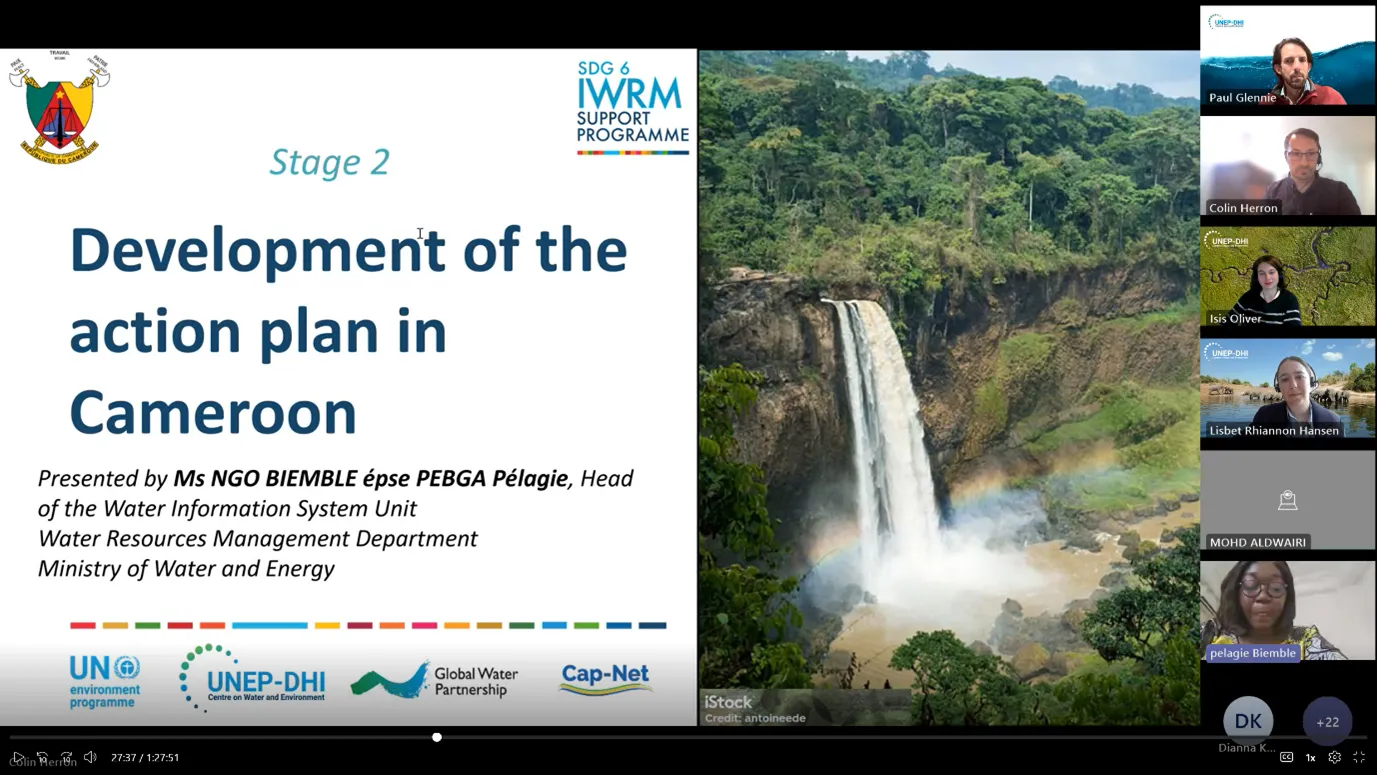
In May, four more countries announced the start of their national action planning processes, through the Stage 2 kick-off meeting organised by the SDG IWRM Support Programme. During this meeting, participants from Cameroon, Jordan, Lesotho and Uganda were invited to present how the water- and climate-action planning process might help them advance towards their national targets by accessing water investments. This meeting was also a great opportunity for countries to be inspired by and learn from each other’s processes.
Page last edited: 5/12/2025