
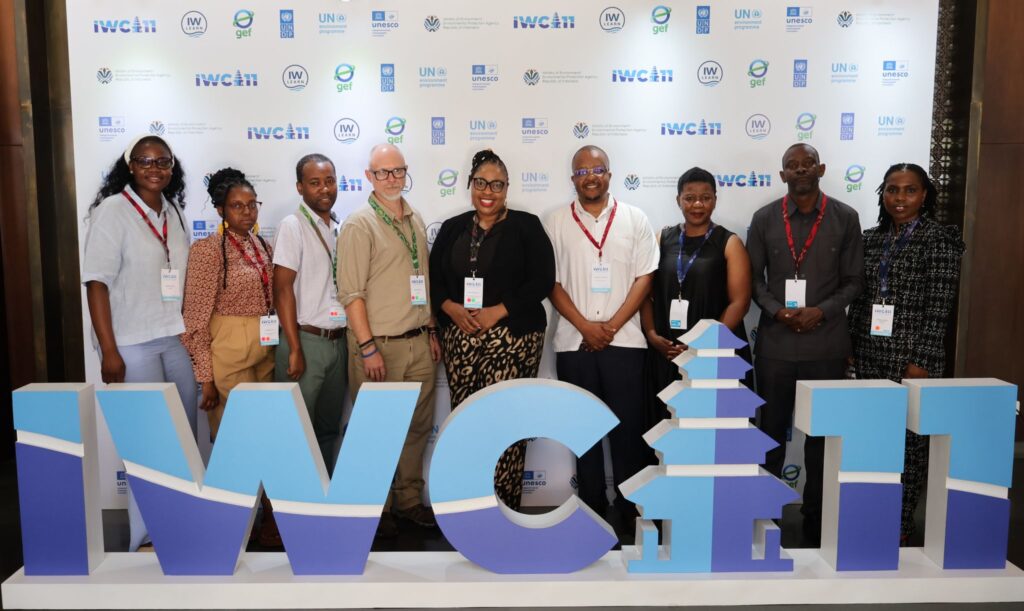
The Global Water Partnership Southern Africa (GWPSA) used the 11th GEF Biennial International Waters Conference (IWC11) in Bali to elevate African experience, strengthen partnerships and advance practical solutions for shared freshwater and marine ecosystems. Participating alongside the Global Water Partnership Organisation (GWPO) and through its portfolio of Global Environment Facility (GEF)-funded projects, GWPSA brought evidence from river basins and African Small Island Developing States (SIDS) into global discussions on systems change.
Under the conference theme, “Shared Waters, Transformative Solutions: Enabling Systems Change,” GWPSA’s engagement demonstrated how regional institutions, better data, community action and sustainable finance can work together to turn project results into enduring impact.
Lessons on Closing the Water Investment Gap
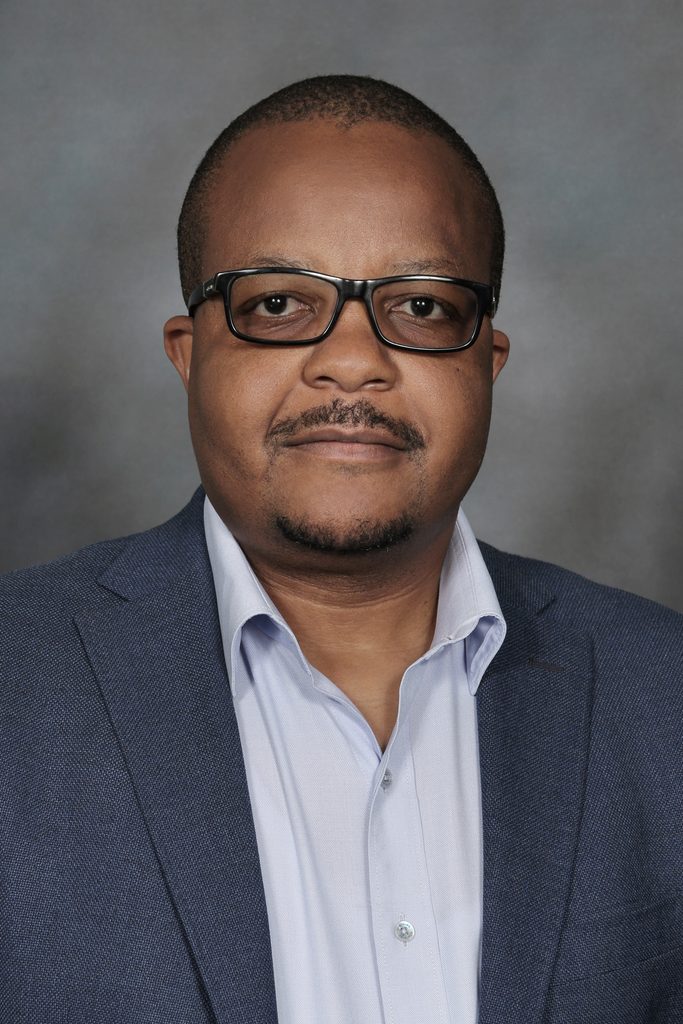
A major focus of GWPSA’s participation was also on closing the gap between sound water priorities and investable programmes. At a side event co-convened by the Global Water Partnership Organisation (GWPO), in collaboration with The World Bank Group-hosted Global Facility for Transboundary Waters, “From Investable to Bankable: Financing Transboundary Water Solutions,” Mr. Andrew Takawira, GWPSA Executive Secretary (left), highlighted climate-resilient Water Investment Programmes under the Continental Africa Water Investment Programme as a pathway for securing investor commitment to country and transboundary project pipelines.
Global Water Partnership in Africa has supported more than 20 countries to develop Water Investment Programmes. GWPSA also highlighted the AIP-PIDA Water Investment Scorecard, which helps countries track progress, identify bottlenecks and strengthen mutual accountability in efforts to meet investment requirements for Sustainable Development Goal 6.
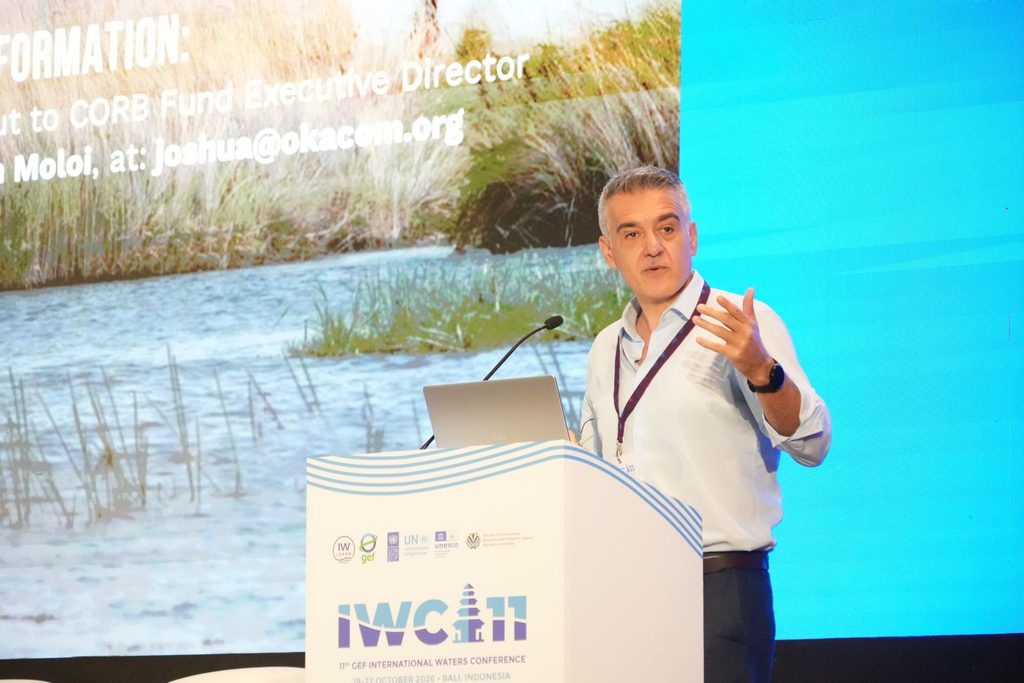
Dimitris Faloutsos, GWPO’s Global Head of Transboundary Water Governance (right), outlined two complementary priorities: helping river-basin organisations establish long-term financing mechanisms for cooperation, and converting basin priorities into structured opportunities through screening, assessment, country endorsement, feasibility work and financing strategies.
The Cubango-Okavango River Basin Fund provided a practical example. Executive Director Joshua Jogiga Moloi presented a mechanism projected to generate USD 7 for every USD 1 invested, support water, sanitation and hygiene services for more than 370,000 beneficiaries, and establish approximately 500,000 hectares of new protected areas. GWPSA has supported the fund as Interim Fund Manager.
Project Impact Showcased
GWPSA’s participation drew on lessons from five ongoing projects for which it serves as executing agency:
✅ Integrated Transboundary River Basin Management for the Sustainable Development of the Limpopo River Basin Project
✅Enhanced Water Security and Community Resilience in the Adjacent Cuvelai and Kunene Transboundary River Basins (CUVKUN) Project
✅ Supporting Sustainable Inclusive Blue Economy Transformation in African Small Island Developing States (SIDS) Project
✅ Strengthening Integrated Transboundary Management of the Incomati and Maputo River Basins Project
✅ Strengthening Integrated Transboundary Source to Sea Management of the Ruvuma River Basin and its Coastal Zones to Ensure Ecosystem Health and Livelihood Security Project
Experiences from the now concluded project “Management of Competing Water Uses and Associated Ecosystems in the Pungwe, Buzi and Save basins” also informed the exchange.
These initiatives span river-basin governance, source-to-sea management, blue-economy transformation, ecosystem health, climate resilience and livelihood security. Presenting them as a connected portfolio allowed GWPSA to show how locally grounded interventions can contribute to wider institutional reform and regional cooperation.
The projects also gave African institutions and practitioners a platform to exchange lessons with governments, GEF agencies, scientific institutions, civil society and development partners. This helped position Southern African and African SIDS priorities within the international waters community while opening opportunities for cross-regional learning.
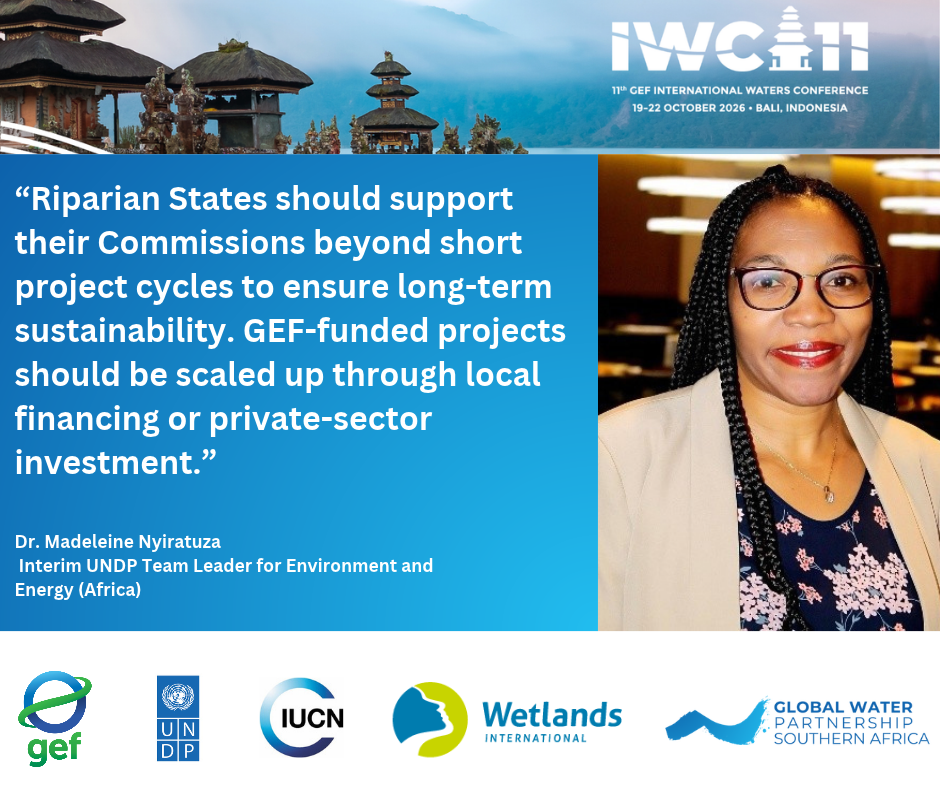
UNDP, which is an implementing agency for most of these projects, emphasized the importance of sustaining results beyond GEF-funded project cycles. Dr Madeleine Nyriatuza, UNDP Africa Team Leader for Environment and Energy and Regional Technical Advisor for Water, Oceans, Ecosystems and Biodiversity (Africa) urged stakeholders to use GEF funding to mobilize additional resources.
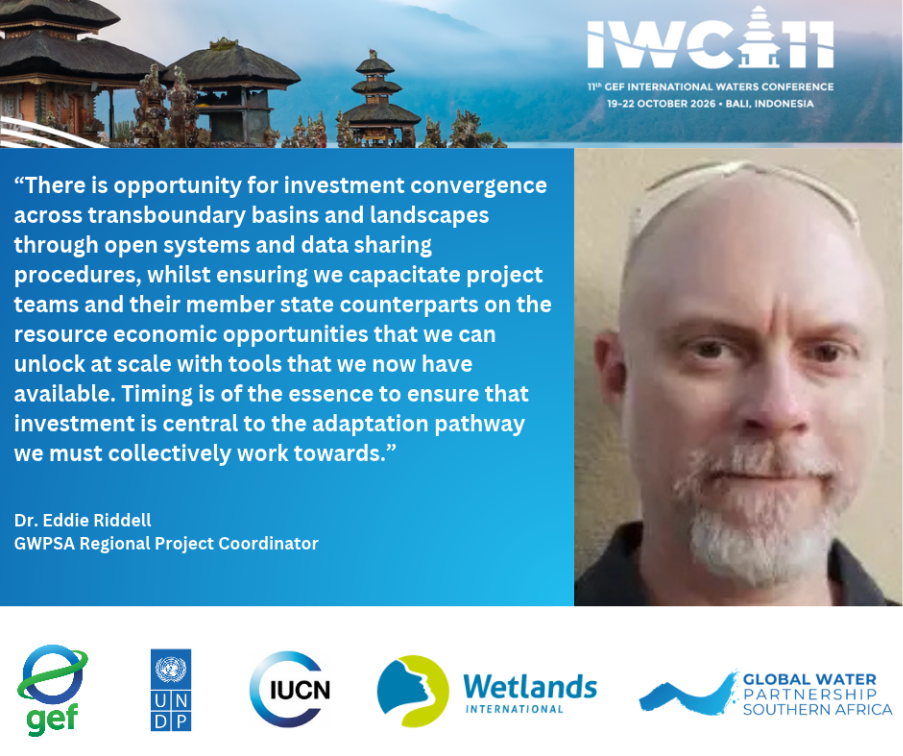
The Limpopo River Basin Project reinforced demonstrated the value of open systems, data-sharing procedures and stronger capacity among project teams and Member State counterparts. Its experience underscored that investment must be embedded in climate-adaptation pathways if technical gains are to be sustained and expanded.
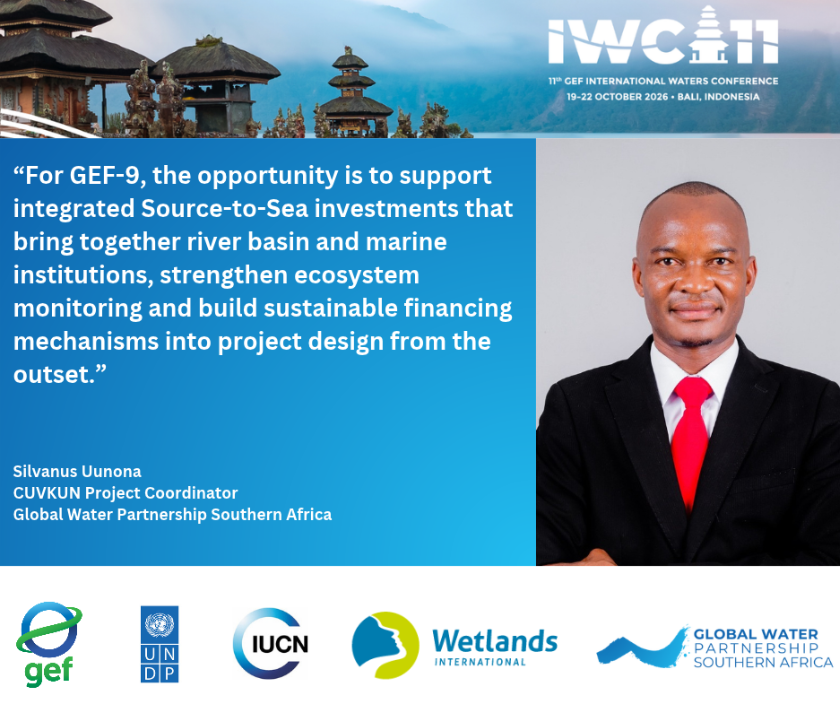
The CUVKUN Project illustrated how transboundary cooperation can deliver practical benefits. Across the Cuvelai and Kunene basins, the project is strengthening institutions, hydrological data sharing and technical capacity between Angola and Namibia. Progress includes development of the Cuvelai Water Information System, stronger data-sharing partnerships, and training in disaster preparedness and water-resources modelling.
Thirteen community demonstration pilots connect this basin-level cooperation with local needs through well upgrades, floodwater harvesting, community flood early-warning systems, and improved agricultural land and water management. Sharing these experiences at IWC11 enabled the project to contribute practical lessons while identifying approaches that could further strengthen basin management and community resilience.
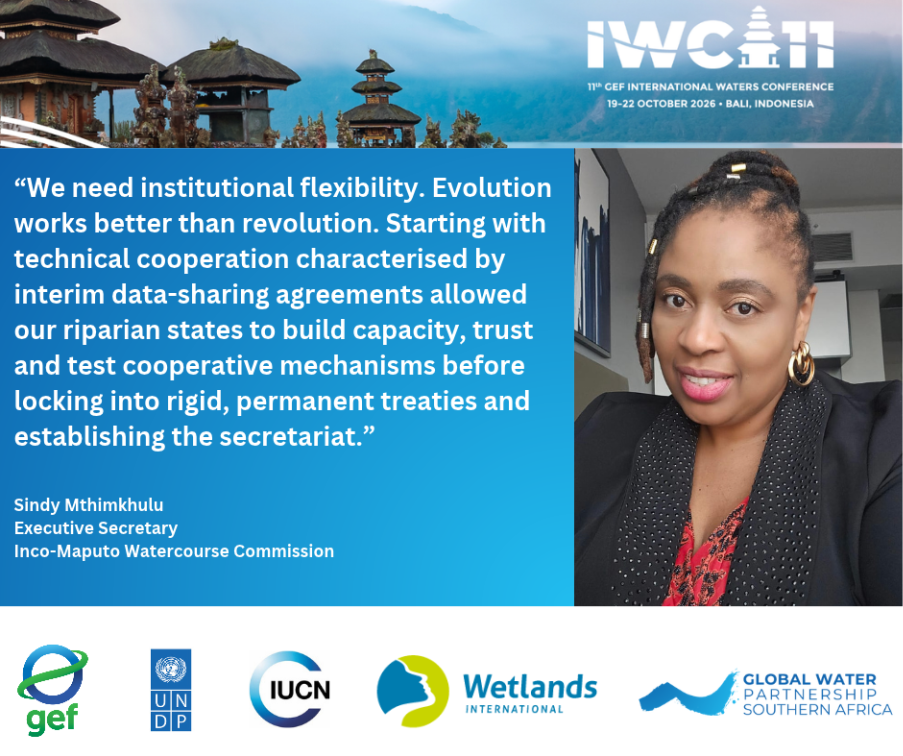
For the IncoMaputo River Basin Project lessons from Bali are directly relevant to ongoing efforts to strengthen ecosystem health, climate resilience, and integrated water resources management across the Incomati and Maputo River Basins. The participation offered practical insights into ecosystem restoration that balances environmental protection with community development, nature-based solutions for climate adaptation and disaster risk reduction, biodiversity conservation and habitat protection, community participation in natural resource management and knowledge exchange with international water practitioners and development partners.
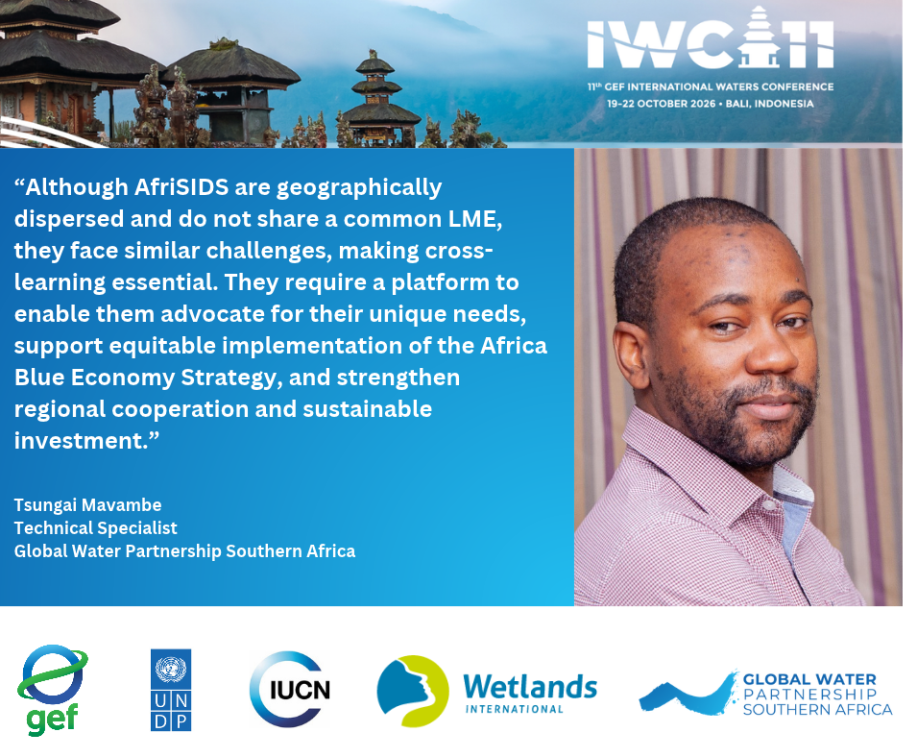
Through AfriSIDS, GWPSA helped bring the perspectives of six African island states-Cabo Verde, Comoros, Guinea-Bissau, Mauritius, São Tomé and Príncipe, and Seychelles-into global environmental cooperation. The project combines environmental sustainability with an inclusive and resilient blue economy through six national blue-economy demonstration projects and one land-degradation-neutrality ridge-to-reef demonstration project.
During the SIDS Inter-regional Dialogue, GWPSA shared lessons on integrating ecosystem valuation into blue accounts. Discussions also explored source-to-sea spatial prioritisation, the scaling of solutions, and stronger knowledge management, awareness and stakeholder capacity. The engagement gave African SIDS an opportunity to learn from other regions while ensuring that their realities and priorities informed broader debates on environmental governance and sustainable development.
These project results and lessons were shared during a side event that GWPSA co-convened titled “Regional Coordination in Action: Experiences of Institutional Pathways, Implementation and Systems Change from the Mediterranean, African Transboundary Processes and Eastern Pacific Corridor.” The session was jointly hosted with the UNEP/Mediterranean Action Plan and the Eastern Tropical Pacific Marine Corridor.
The session explored how regional cooperation can align policies, mobilise investment, transfer knowledge and sustain institutional and financial results beyond individual project cycles. Panellists identified inclusion of women and young people, cross-learning, institutional continuity and financing for wider economic and environmental benefits as shared priorities. The discussion showed that regional platforms are essential bridges between national action and durable management of shared ecosystems.
GWPSA also participated in a strategic communications workshop focused on translating technical results, credible evidence and successful solutions into political support, partnerships, investment and wider uptake. This was particularly relevant to a portfolio whose impact depends not only on delivering activities, but also on influencing policy, attracting finance and enabling replication.
A platform for continued impact
GWPSA’s contribution at IWC11 demonstrated a consistent approach to transboundary water challenges, including the need to strengthen institutions, connect data and knowledge, ground regional cooperation in community realities, and place investment at the centre of long-term sustainability.
It shared evidence from diverse basins and island states, convened cross-regional dialogue and advanced practical financing pathways. The lasting value of its participation will lie in how these exchanges inform stronger programmes, scalable solutions and resilient institutions across Africa’s shared waters, especially for the Global Environment Facility’s (GEF) latest funding cycle, known as GEF-9, running from July 2026 to June 2030.