
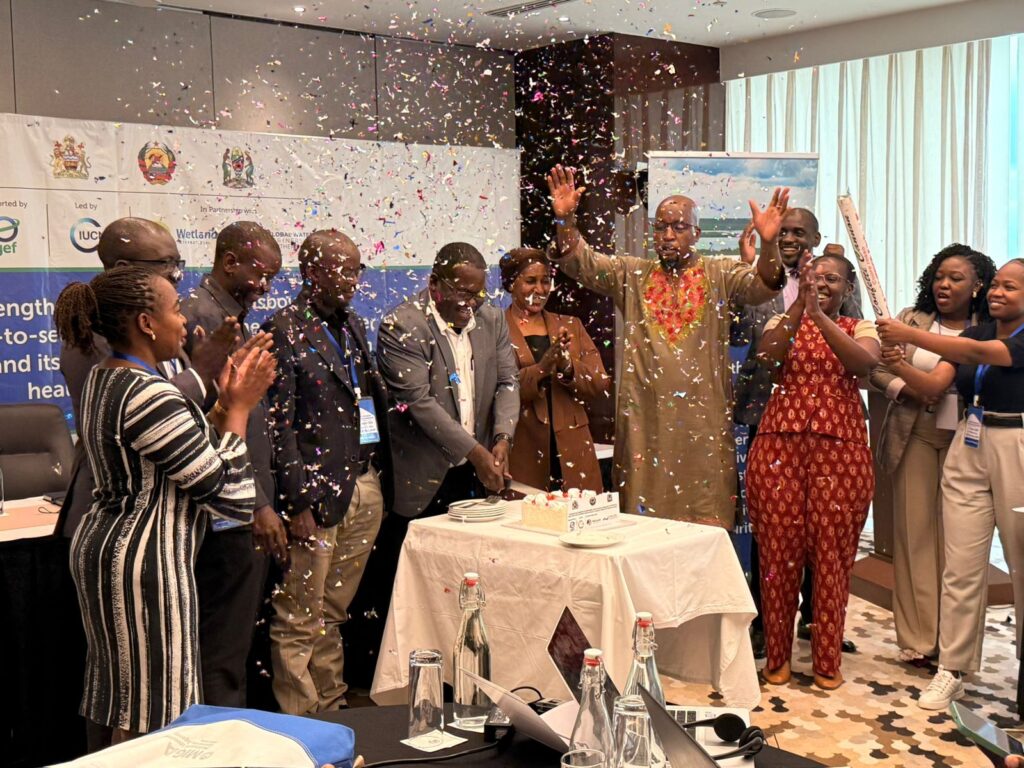
Above: Member States and project partners celebrate the official launch of the Ruvuma River Basin Project
Malawi, Mozambique, and the United Republic of Tanzania in March formally launched a major joint initiative aimed at strengthening integrated transboundary management of the Ruvuma River Basin and its associated coastal and marine ecosystems.
The project, “Strengthening integrated transboundary source-to-sea management of the Ruvuma River Basin and its coastal zones to ensure ecosystem health and livelihood security,” was launched during an inception workshop from 4 to 5 March 2026 in Tanzania.
Valued at USD 7.12 million and scheduled for implementation over 60 months through December 2030, the project is funded by the Global Environment Facility (GEF). It is led by the International Union for Conservation of Nature as the GEF Implementing Agency, in partnership with Global Water Partnership Southern Africa and Wetlands International as Executing Agencies.
Speaking during the launch event, IUCN said it views the initiative as a transformative opportunity that not only restores landscapes and improves natural resources management and governance, but also strengthens livelihoods, and catalyzes long-term investment.
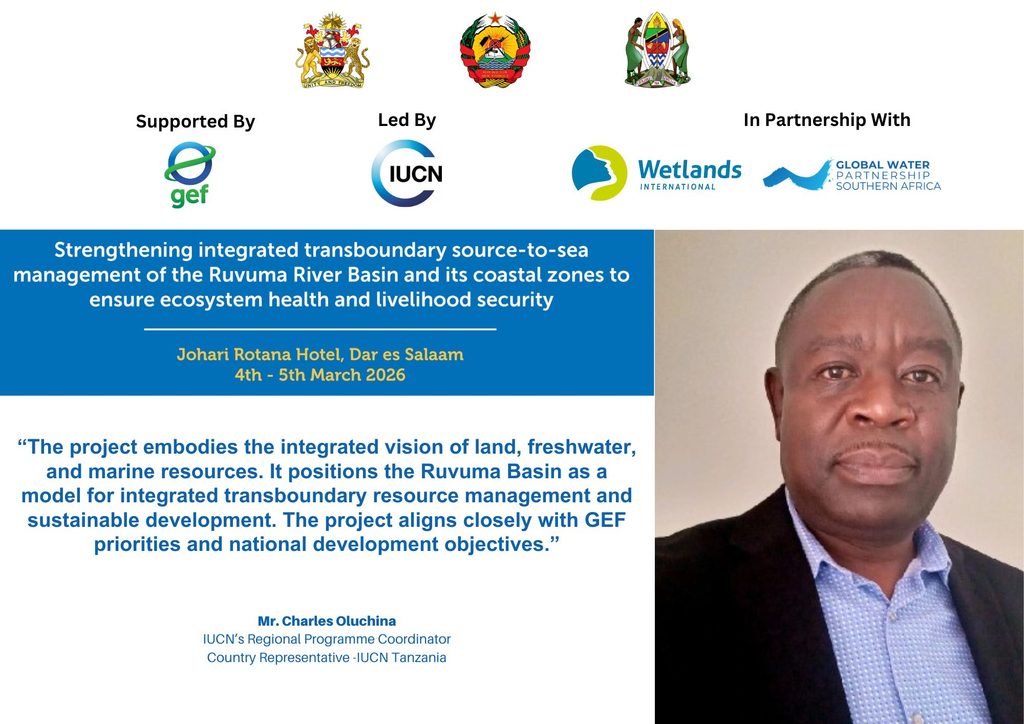
Mr. Charles Oluchina, IUCN’s Regional Programme Coordinator & Country Representative for Tanzania, said the project will demonstrate how nature-based solutions can simultaneously conserve ecosystems, improve livelihoods, and build resilience to climate change.
“The project has set ambitious but achievable targets. It will support the restoration of 88,620 hectares of degraded land and ecosystems, promote improved landscape management practices across 279,899 hectares, and directly benefit more than 50,000 people. These targets reflect a commitment not only to ecosystem restoration but also to inclusive development and community empowerment,” he said.
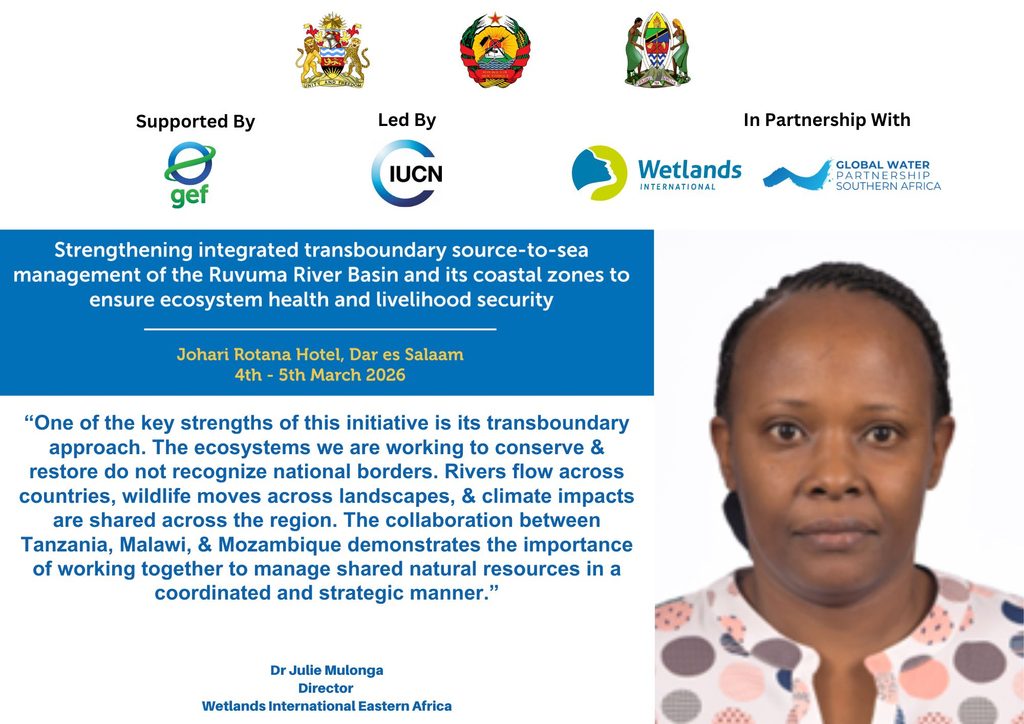
Dr. Julie Mulonga, Director of the Wetlands International Eastern Africa said her organization was committed to supporting the successful implementation of the project. Her organization’s focus will be on strengthening the conservation and sustainable management of wetlands and water systems within the broader landscape.
“Through this project, we look forward to working closely with governments, IUCN as the GEF Agency, GWPSA and all implementing partners to ensure that wetlands and water systems are effectively integrated into landscape planning and management,” said Dr. Mulonga.
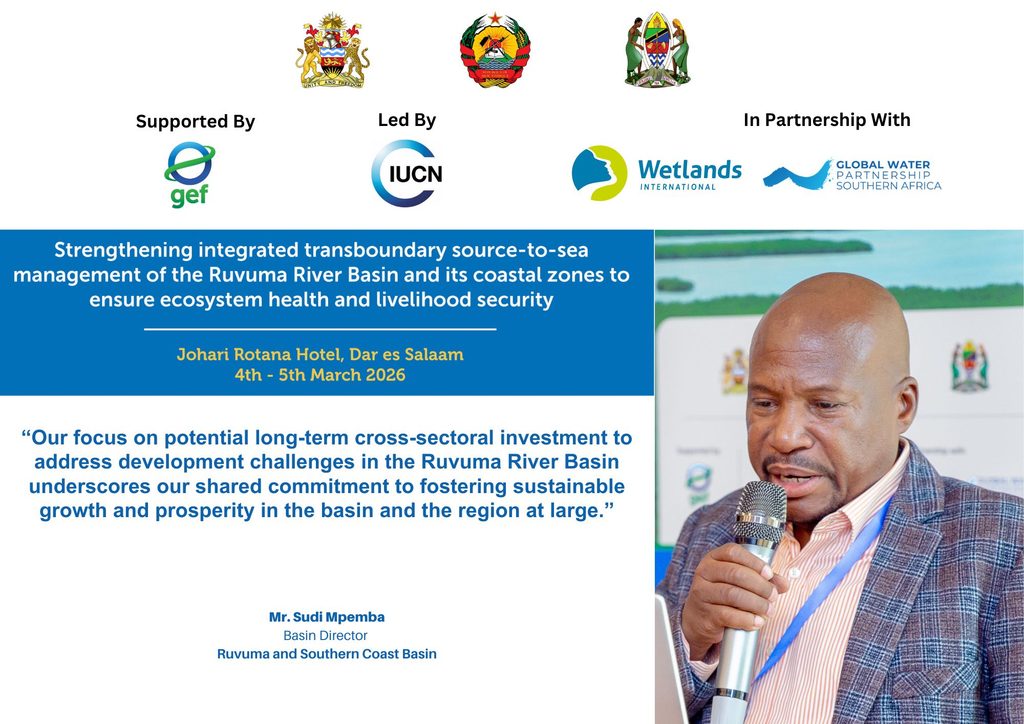
The host country, the United Republic of Tanzania reminded partners of the responsibility and opportunity that lie ahead. Stakeholders were urged to remain mindful of both the urgency and significance of the mission to transform challenges into opportunities that can deliver lasting impact for communities across the basin.
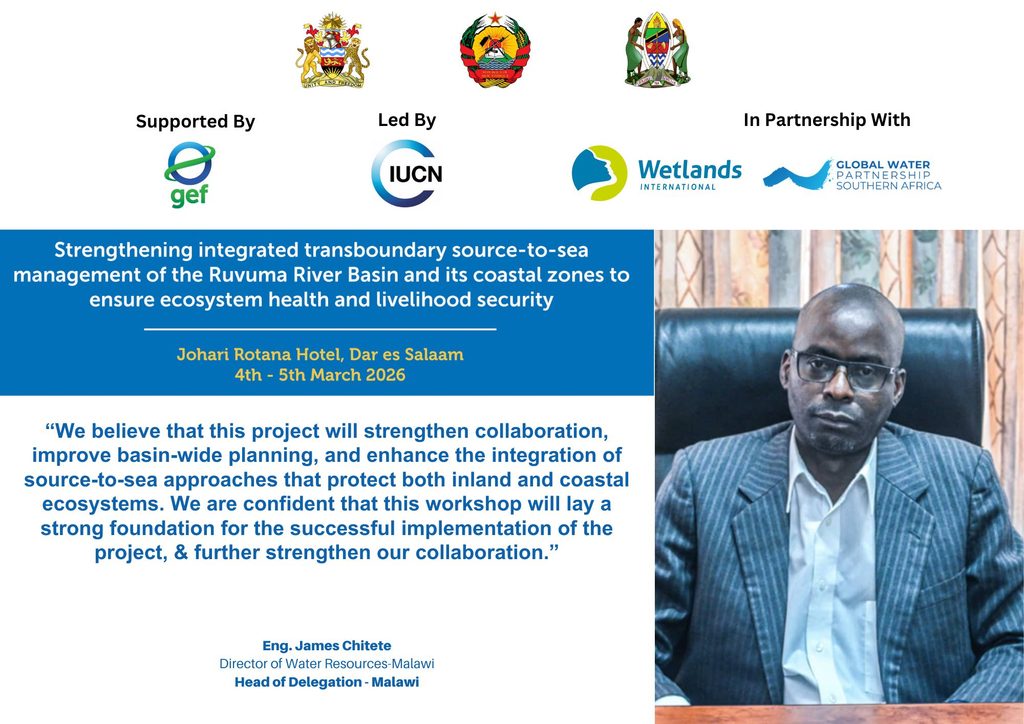
Eng James Chitete, Director of Water Resources in Malawi, and leader of the Malawi Delegation, said the Ruvuma River Basin Project would advance water resources management, safeguard ecosystems, improve livelihoods, and ensure that shared natural resources are managed in a way that benefits present and future generations.
The Ruvuma/Rovuma River, known as Rio Rovuma in Mozambique, forms the border between Tanzania and Mozambique and extends approximately 800 kilometres, with a drainage basin covering 155,500 square kilometres across Mozambique, Tanzania and Malawi. The perennial river and its tributaries provide a reliable source of water for communities and support important ecosystems and wildlife, including extensive protected areas on both sides of the border.
Despite its importance, the basin faces challenges including climate change, limited reliable information, inadequate cross-border coordination, weak integrated management frameworks and limited stakeholder participation. The newly launched project is expected to resolve some of these challenges.