
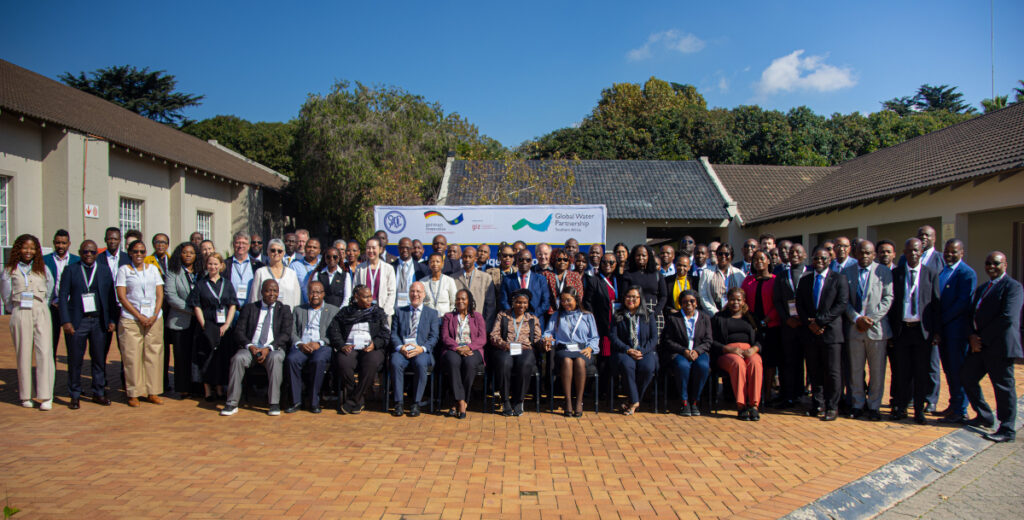
The Southern African Development Community (SADC) convened a regional workshop in Johannesburg, South Africa, from 4 to 6 May, to validate critical regional strategies and frameworks shaping the future of water governance, climate resilience, and sustainable development in Southern Africa. The workshop brought together Member States, River Basin Organisations, regional agencies, development partners, civil society, water experts, youth representatives, and other stakeholders
The workshop was funded by the German Government under the German-SADC Cooperation and implemented through Deutsche Gesellschaft für Internationale Zusammenarbeit (GIZ) and the Global Water Partnership Southern Africa (GWPSA).
The workshop focused on reviewing and validating several strategic instruments aimed at improving regional coordination, strengthening institutional capacity, mobilising investment, promoting research and innovation, and enhancing inclusive participation in water governance processes.
Officially opening the workshop, Ms Lindiwe Lusenga, Deputy Director General of Provincial and Entity Governance and International Cooperation, South Africa, commended the process to review and validate the water sector strategies, stating that these had potential to build a strong SADC.
“The SADC Secretariat has since 2025 been working on updating these strategies and policies including the SADC Regional Water Policy, Strategic Human Capacity Development Plan, and the SADC Water Research Agenda. All these are important for our work and should be reviewed to be able to address current challenges and take us forward with our aspiration of regional integration and sustainable development,” she stated.
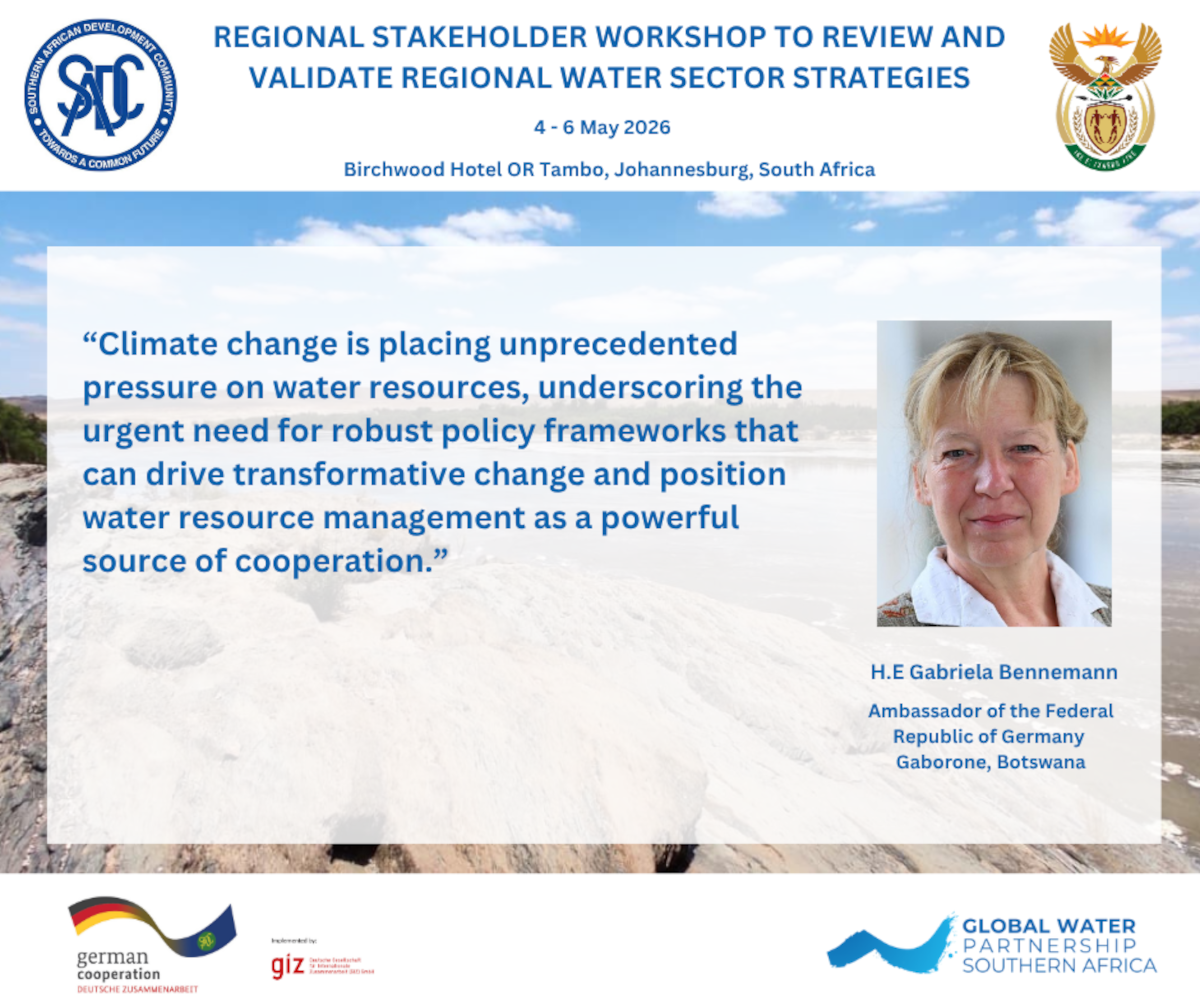
The German Ambassador to Botswana, H.E. Ms. Gabriela Bennemann underscored findings from Germany’s human rights reporting that sustainable and cooperative water management is an environmental priority, and a cornerstone for regional stability and security. In a time when climate change is placing unprecedented strain on water systems, she called for robust policy frameworks.
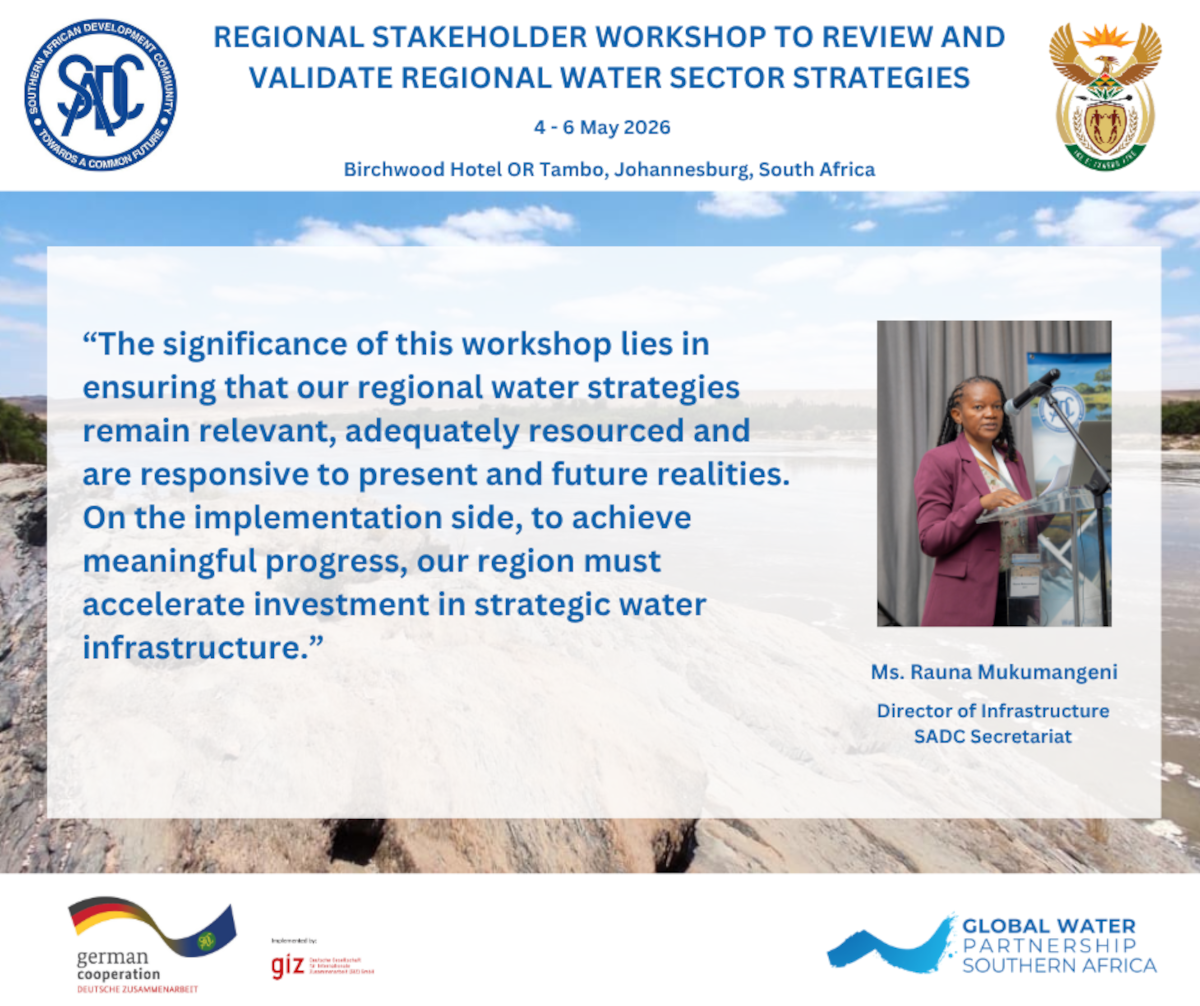
On its part, the SADC Secretariat said the workshop was designed to continue its drive for regional cooperation in water resources management through strategic planning and collective action.
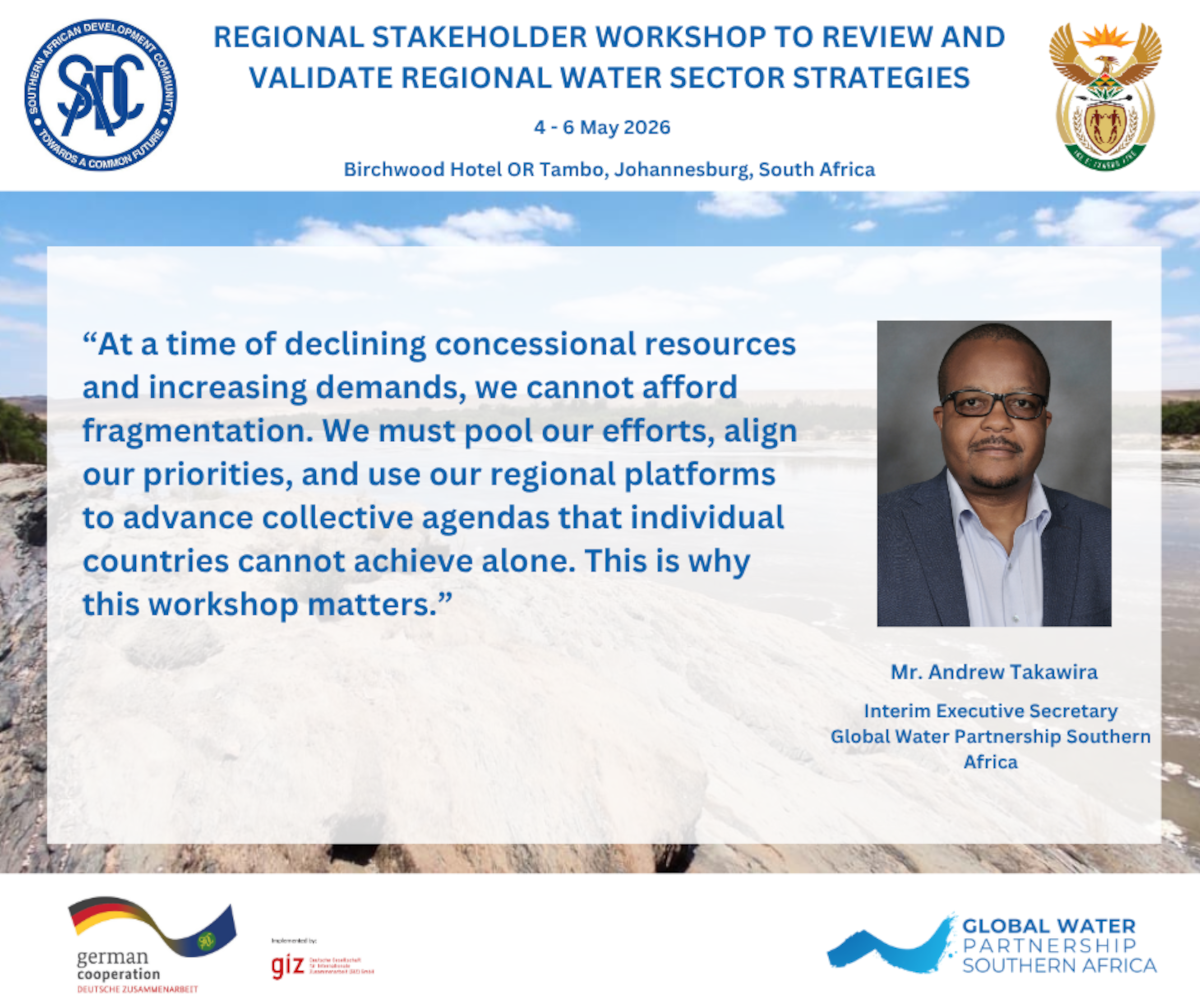
The workshop was held under the SADC Transboundary Water Management (TWM) project, which GWPSA is implementing on behalf of SADC. It is funded by the German Government under the German-SADC cooperation and implemented through the Deutsche Gesellschaft für Internationale Zusammenarbeit (GIZ) GmbH.
Review and Validation of Various Water Strategies
Regional stakeholders at the workshop reviewed the Draft Implementation Plan for the extension of the Fifth Regional Strategic Action Plan (RSAP V) covering the period 2026 to 2030. Discussions highlighted existing gaps between regional ambitions and available implementation capacity, with stakeholders calling for greater impact, stronger inclusivity, and increased ownership by Member States and regional actors.
The workshop validated the RSAP V Extension Implementation Plan which was endorsement by the Water Resources Technical Committee (WRTC) meeting which took place from 6 to 8 May.
Stakeholders received and discussed the Concept Note for the proposed SADC Groundwater Management Programme Phase III, valued at approximately US$51 million. The programme seeks to consolidate achievements from previous phases while scaling up interventions to improve groundwater management and resilience across the region.
Participants welcomed the programme as an important regional intervention and recommended that the SADC Secretariat continue supporting the SADC Groundwater Management Institute (SADC-GMI) in finalising the project design and promoting the initiative for financing support from International Cooperating Partners and Member States.
The workshop also reviewed the revised SADC Water Research Agenda, noting the extensive consultative and peer-review processes undertaken during its development. Stakeholders acknowledged concerns regarding the region’s heavy dependence on international funding for research, which leaves regional initiatives vulnerable to global geopolitical and economic shocks.
However, participants welcomed the proposed funding strategy designed to support implementation of the research agenda. The workshop subsequently validated and endorsed the SADC Water Research Agenda II through the WRTC.
Regional stakeholders reviewed the revised SADC Strategic Human Capacity Development Plan, which outlines eight strategic objectives and five thematic focal areas, with training courses available in the three official SADC languages.
The workshop recognised ongoing collaboration between WaterNet and River Basin Organisations aimed at strengthening regional institutional capacity. Stakeholders further called for stronger inclusivity, synergy, and complementarity among institutions in light of limited resources, while also emphasising the need for Member States to increase investment in youth training, particularly competency-based skills development.
The Strategic Human Capacity Development Plan was validated and endorsed by the WRTC.
Participants also reviewed findings and recommendations emerging from the ongoing review and updating of the Regional Water Protocol. Discussions explored gaps within the existing protocol framework and assessed options for strengthening regional water governance.
While some stakeholders argued that existing challenges could be addressed through improved implementation rather than amendments to the Protocol itself, the workshop also identified several areas requiring enhancement. Three possible models for a revised protocol framework were presented and debated.
The option proposing a Shared Watercourses Protocol complemented by SADC Guidelines or a Model Law for harmonisation of national legislation emerged as the preferred approach. A separate SADC Water Protocol operating in parallel to the Protocol on Shared Watercourses was ranked second.
The workshop recommended that the two highest-ranked options be submitted to the WRTC for further consideration in determining the preferred model for the revised Regional Water Protocol.
Resource Mobilisation Plan for the Water Sector
The workshop further reviewed the Resource Mobilisation Plan for the SADC Water Sector Programme. Stakeholders acknowledged the extensive consultations undertaken during development of the Plan and agreed that while the regional water agenda must become more ambitious, the financing and human resource gap continues to widen.
Participants discussed several strategic approaches for strengthening implementation success, including institutionalising the Water-Energy-Food-Ecosystems (WEFE) Nexus, reframing regional water investment priorities, leveraging concessional finance, and strengthening monitoring, evaluation, learning, and accountability systems across multiple levels.
The workshop validated and endorsed the Resource Mobilisation Plan for use in addressing the regional water funding gap, while calling on the Secretariat to actively promote and implement the strategies outlined in the Plan.
Side Session on Development of a Strategy for Youth Engagement in SADC Water Governance
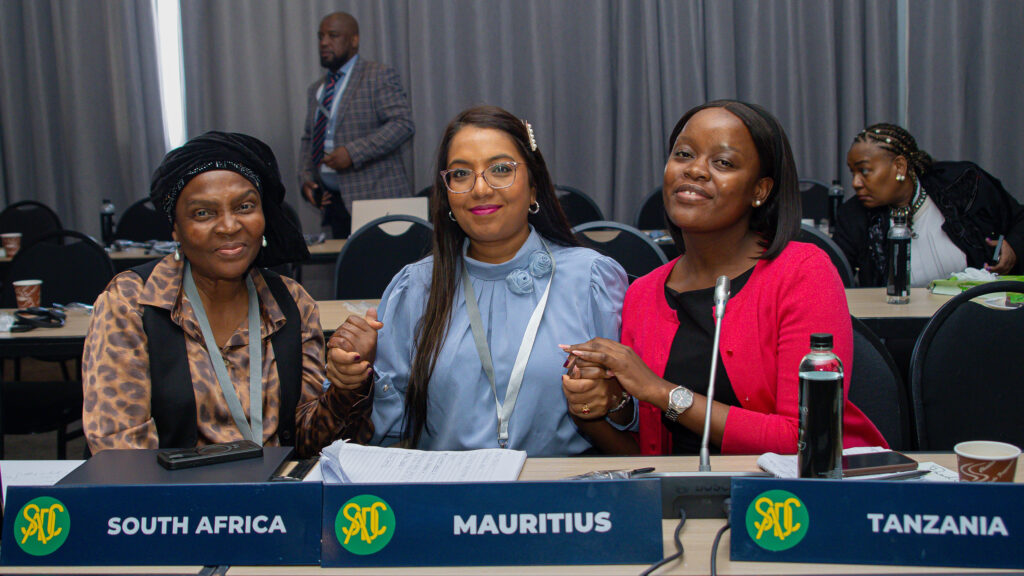
On the sidelines of the regional workshop, young people from across the SADC region convened a dedicated youth session focused on developing a Youth Engagement Strategy for transboundary water management and governance.
The session contributed directly to the development of a robust, inclusive, and actionable strategy grounded in the realities, priorities, ideas, and aspirations of young people across Southern Africa. Participants consolidated recommendations from youth stakeholders, prioritised strategic actions and focus areas, strengthened alignment between youth perspectives and institutional frameworks including SADC, GWPSA, and SAYWIN, and fostered ownership of the strategy among participants.
The proposed Youth Engagement Strategy aims to establish a structured and institutionalised framework for youth participation in SADC water governance processes. It will outline mechanisms for strengthening youth representation, building capacity, fostering partnerships, and increasing youth visibility and impact within regional water governance systems.
The strategy is expected to align closely with the RSAP V priority on gender and youth equity, as well as the SADC Regional Youth Policy Framework. It will also support implementation of the SADC Water Research Agenda by promoting youth-led research, innovation, and knowledge exchange in transboundary water management across the region.