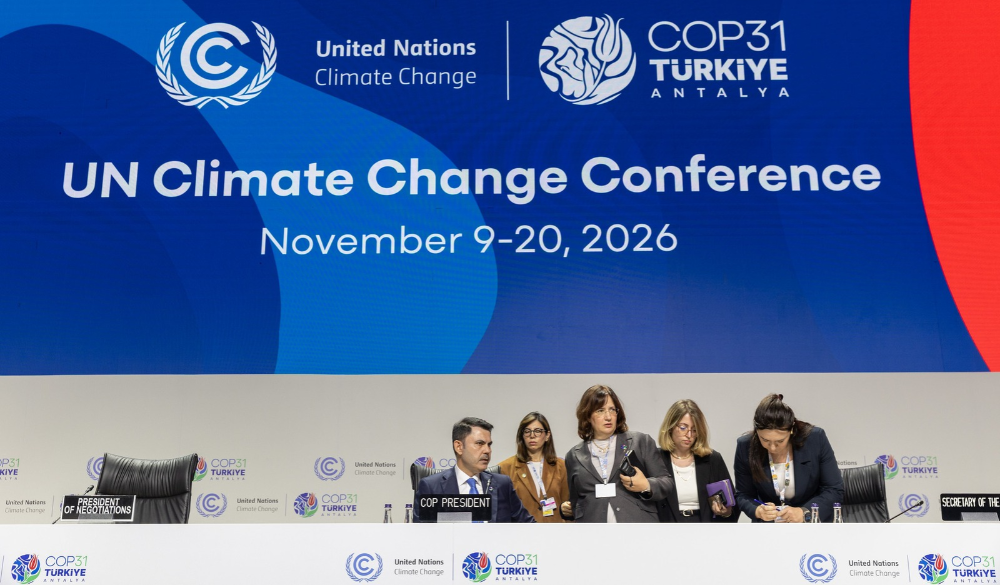
The 31st United Nations Climate Change Conference (COP31) concluded on 22 November without an overarching agreement, as countries failed to reach consensus on key climate commitments. While some progress was made on adaptation and other negotiating issues, the central question for vulnerable countries – how the commitment to at least triple adaptation finance by 2035 will be delivered – remains unanswered.
For water, this means accelerating climate-resilient investments and ensuring that finance reaches vulnerable communities. Countries have already set out their water priorities in National Adaptation Plans and NDCs. What they need now is the means to turn those priorities into investment programmes that can be prepared, financed, and implemented.
In Antalya, GWPO, led by Anjali Lohani, Global Head – Water & Climate Resilience Investments, engaged governments, climate funds and development partners – including the Green Climate Fund (GCF), Adaptation Fund and NDC Partnership – on the next phase of climate-resilient water investments, and contributed to side events advancing country-led and regional investment programmes.
The Global Water Investment Platform (GIP), a G20 Legacy initiative, and the GIP Blended De-Risking Facility, which will be launched at the 2026 UN Water Conference, address the preparation and readiness barriers that stop national priorities and project from reaching finance at scale. They support the GWP 2026–2030 Strategy ambition to leverage US$15 billion in water investments and influence US$500 million in catalytic finance by 2030.
Political leadership is central to this ambition. On the margins of COP31, GWPO announced that the Government of Mongolia will serve as Founding Co-Chair of the planned Asia-Pacific High-Level Panel on Water and Climate Resilience Investments.
A summary of GWPO and the Regional Partnership engagements and progress is outlined below:
From political leadership to water investments
Africa Day – From investment readiness to financing
At the African Union Commission’s ministerial Africa Day event, Securing Africa’s Water: Advancing Climate Resilience, Early Action and Climate Finance, GWPO’s contribution to the Continental Africa Water Investment Programme (AIP) was highlighted, including the African Union–GCF Readiness Programme supporting 15 countries, calling for GCF approval of a second phase extending support to ten additional countries, co-developed with the AUC.
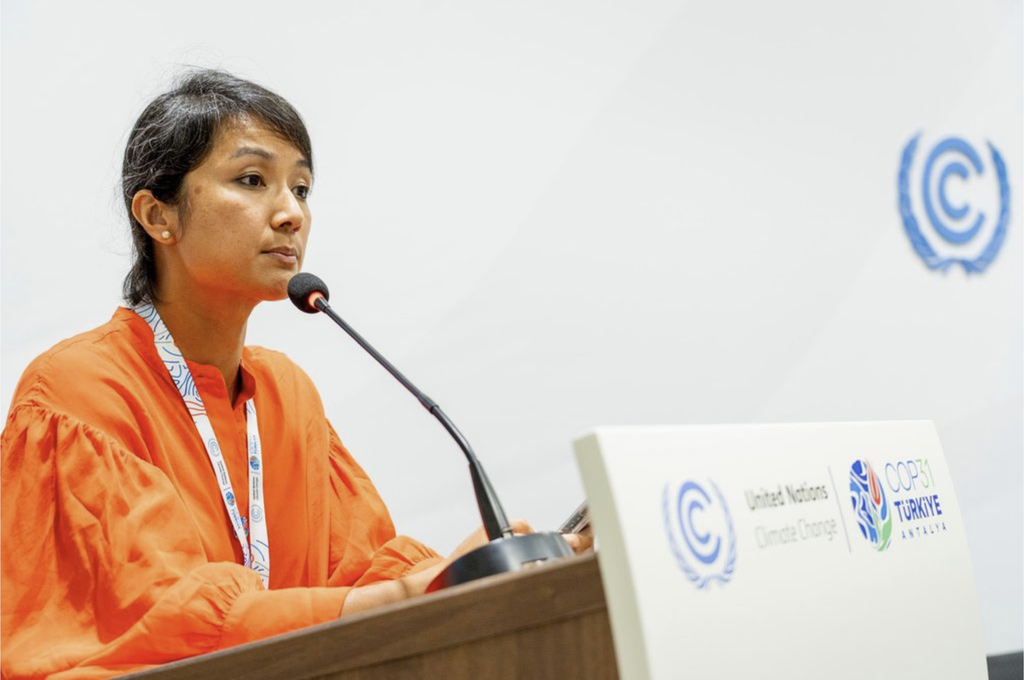
Anjali Lohani of GWPO speaking at the African Union’s ministerial Africa Day event.
Referring to the AIP-PIDA Africa Water Investment Scorecard, GWPO highlighted the gap between investment readiness and financing. The 2025 assessment, covering 30 countries, showed an average investment readiness score of 41.2 out of 100. While planning and enabling environments scored 59.6, investment mobilisation scored just 22.5 – underscoring the challenge of translating readiness into financing.
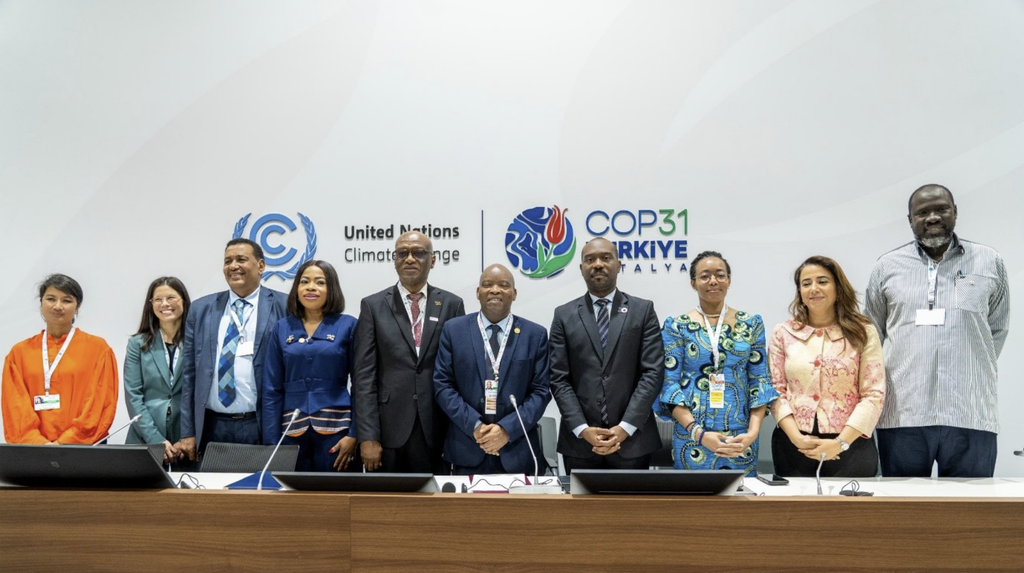
Panellists at the African Union’s ministerial Africa Day event.
Burundi – Advancing integrated water investments across the Rio Conventions
From GWP Eastern Africa, Anicet Nkurikiye, Burundi’s Programme Coordinator for Water Management and Climate Resilience, spoke at the 19 November COP31 side event From Ulaanbaatar to Antalya: Applying and Investing in the Rio Nexus at the Food & Agriculture Pavilion co-hosted by CGIAR and FAO. The dialogue explored how national priorities, scientific evidence and project preparation can come together to deliver climate, biodiversity and land restoration benefits.
With GCF Readiness support, Burundi has developed a climate-resilient water investment programme that identifies priority investments contributing to its commitments under the three Rio Conventions on climate change, biodiversity and desertification. Through a follow-up phase of GCF support, requested in the 10-country AUC water investment Readiness programme, Burundi aims to strengthen the financing frameworks and institutions needed to move priority projects from the investment programme towards financing.
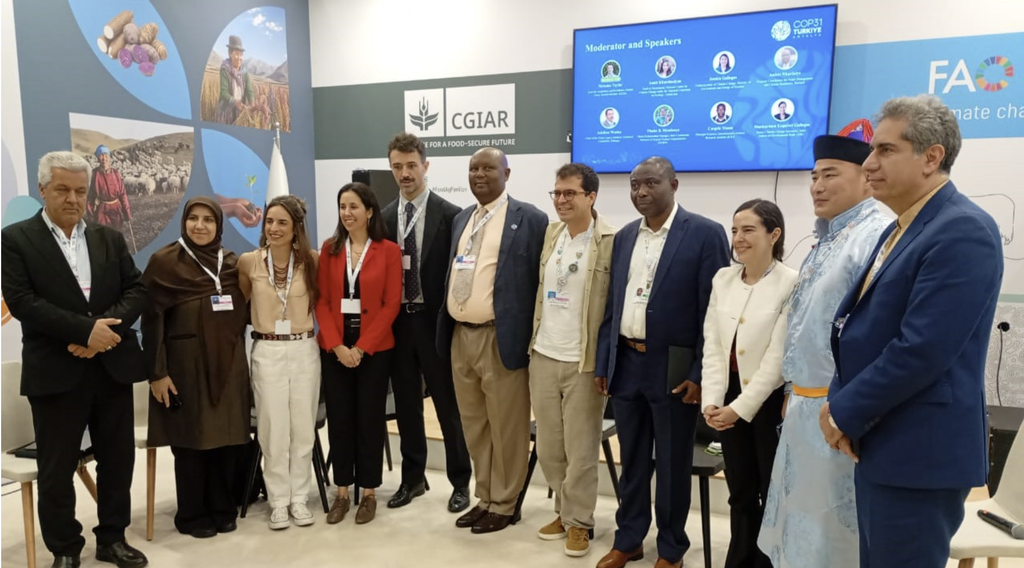
Panellists at the COP31 side event From Ulaanbaatar to Antalya: Applying and Investing in the Rio Nexus, which discussed national integrated water investment programming
Southern Africa – Advancing regional resilience investments
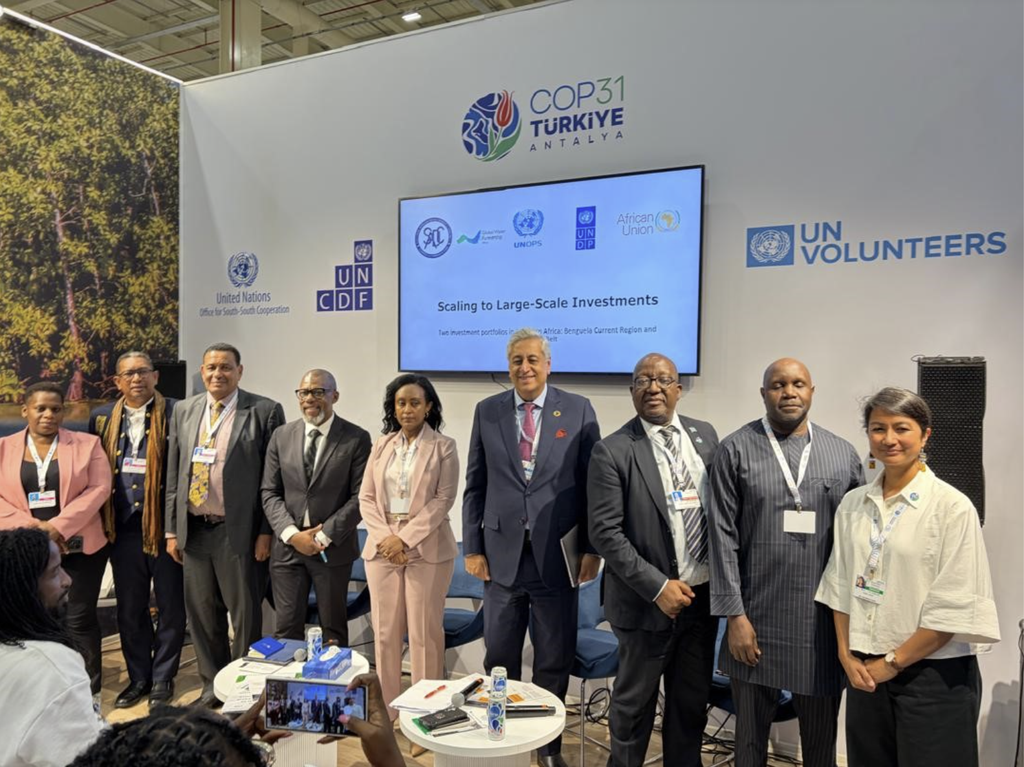
At the UNDP Pavilion, GWPO co-moderated a dialogue on two proposed investment portfolios for the Benguela Current Region and SADC Cyclone Belt, covering 15 countries and approximately US$6.3 billion in potential investments.
Panellists discussed proposed regional resilience investments covering 15 countries in Southern Africa
Convened by the Southern African Development Community (SADC), African Union Commission, UNDP, UNOPS and GWP Southern Africa, the dialogue brought together governments and development partners to explore the technical preparation and financing partnerships needed to advance these early-stage regional programmes.
Namibia – Investing in water security and resilient livelihoods
At the Namibia Pavilion, a high-level dialogue focused on the Namibian Government’s proposed Kunene Water Security and Climate-Resilient Livelihoods Project, which will connect reliable water services and sustainable catchment management with climate-resilient agriculture, livestock production and rural economic opportunities.
GWPO is able to connect institutions, communities and financing partners around a coherent investment programme and for Kunene, success will mean preparing interventions whose risks are understood, whose financing matches their benefits, and whose services remain affordable and reliable through future climate shocks.
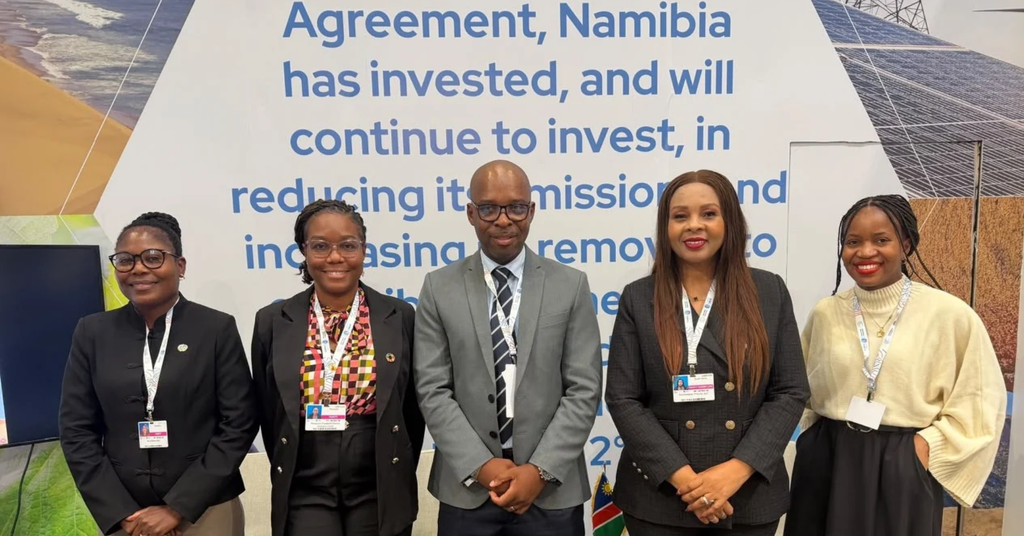
Panellists at the high-level dialogue on the proposed Kunene Water Security and Climate-Resilient Livelihoods Project. GWPO was represented by Roxanne Graham-Victor, Regional Coordinator for GWP Caribbean
Drin Basin – Connecting source to sea
At Albania’s Pavilion, the panel discussion From Drin to the Adriatic – The Drin/Buna Basin, from Source to Sea highlighted results from the transboundary cooperation process in the Drin Basin, facilitated by GWP-Mediterranean since 2011. The management of the Drin basin and its resources has transitioned from uncoordinated, purely national actions to a shared regional governance framework under the 2011 Drin MoU and the Drin CORDA process.
Going forward, GWP-Mediterranean is facilitating the negotiation process towards an International Agreement for the Drin Basin, in coordination with UNECE. The agreement would establish a permanent Drin Commission, backed by a transboundary River Basin Management Plan. During discussions with Krommydas and Sonja Koeppel, Secretary of the UNECE Water Convention, Albania’s Minister of Environment, Sofjan Jaupaj, expressed his full support for the process (see photo).
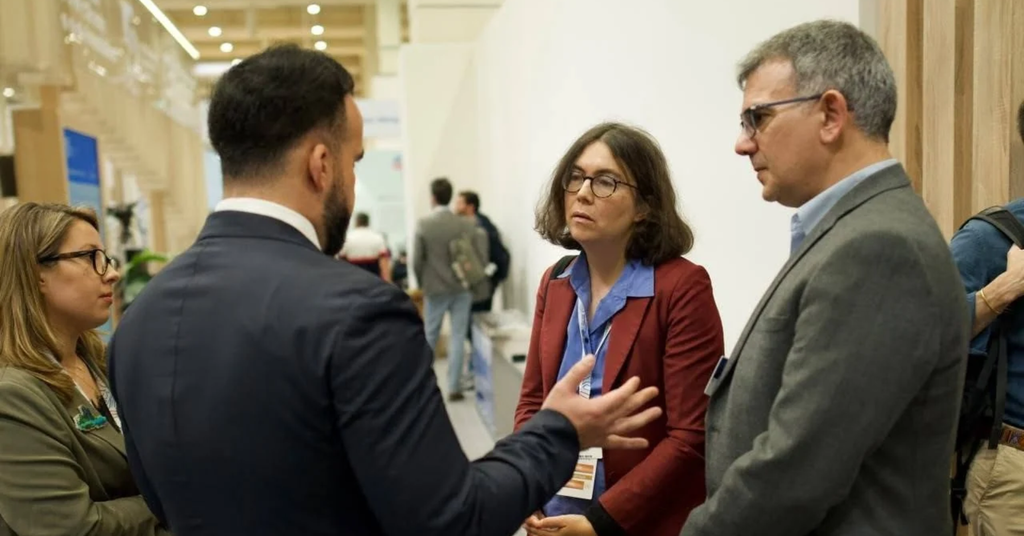
Albania’s Minister of Environment, Sofjan Jaupaj, in discussion with Sonja Koeppel of UNECE and Tassos Krommydas of GWP-Mediterranean.