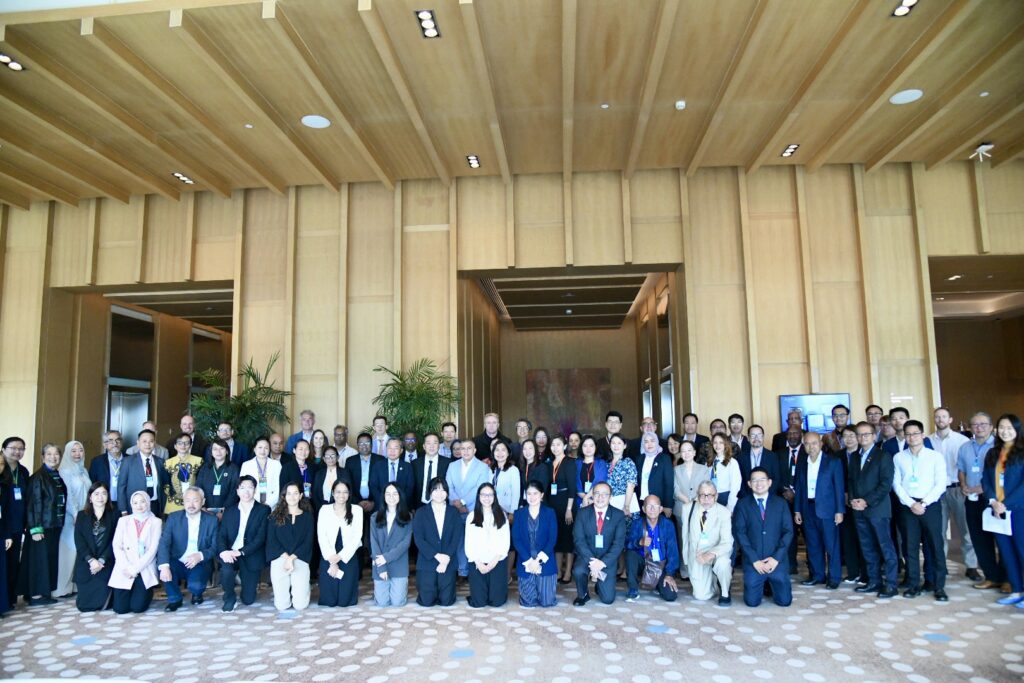
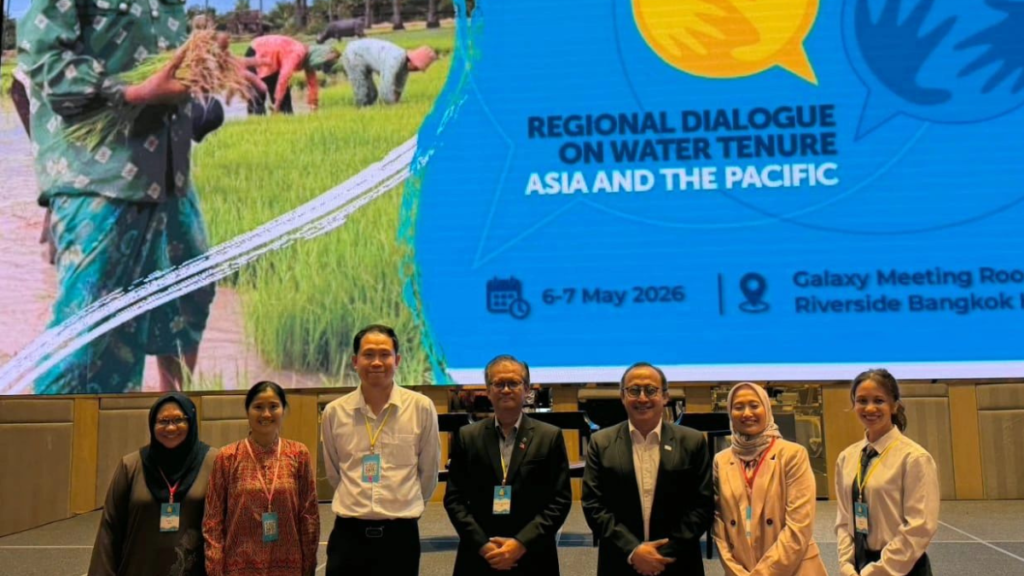
The Regional Dialogue on Water Tenure in Asia and the Pacific was successfully convened in Bangkok, Thailand, from on 6–7 May 2026. Hosted by the Food and Agriculture Organization Regional Office for Asia and the Pacific (FAO RAP) at the Avani+ Riverside Bangkok Hotel, the two-day event brought together more than 150 participants from over 20 countries across Asia and the Pacific. Participants represented a diverse range of stakeholder, including government agencies, academic institutions, researchers, civil society organizations, development partners and indigenous representatives.
The Regional Dialogue on Water Tenure in Asia and the Pacific was successfully convened in Bangkok, Thailand, from on 6–7 May 2026. Hosted by the Food and Agriculture Organization Regional Office for Asia and the Pacific (FAO RAP) at the Avani+ Riverside Bangkok Hotel, the two-day event brought together more than 150 participants from over 20 countries across Asia and the Pacific. Participants represented a diverse range of stakeholder, including government agencies, academic institutions, researchers, civil society organizations, development partners and indigenous representatives.
The dialogue served as a key regional contribution to the upcoming 2026 Global Dialogue, aiming to refine the principles of fair water access and responsible governance. The event was supported by Global Water Partnership Southeast Asia (GWP-SEA), with more than 15 representatives from GWP-SEA’s Country Water Partnerships actively participating in the discussions and contributing to a strong multi-stakeholder approach.
The program began with remarks from the Office of National Water Resources (ONWR) of Thailand, FAO RAP, and diplomatic representatives from Germany, Australia, and Vanuatu. Speakers emphasized the importance of understanding water tenure’s legal definition, implementation, and social recognized to achieving equitable and sustainable water management. The opening sessions introduced the draft “Elements for the Responsible Governance of Water Tenure,” a framework inspired by previous global guidelines for land and fisheries, aimed at rethinking water management and protection.
One of the key highlight of the first day was the interactive “World Café” session, where participants engaged with experts on practical tools and thematic case studies. Discussions covered a broad spectrum of issues, including water accounting for fair allocation, cooperative responsibility in Indonesia, and the vital inclusion of indigenous voices, such as the Dusun Tatana community from Malaysia. During the session, GWP-SEA presented the linkage between IWRM and Water Tenure, highlighting the importance of Water Tenure Assessment as an instrument to strengthen water governance and support the implementation of IWRM, particularly under Sustainable Development Goals (SDG) Indicator 6.5.1. It emphasizes the role of an evidence-based water accounting and fair water allocation in supporting inclusive and sustainable water governance.
A Real-time Mentimeter poll further captured participant’s perspective on key water tenure priorities in the Asia Pacific contextSeveral themes emerged as regional priorities, with top priority on Identification, recognition and protection of all legitimate water tenure arrangements; then Fair and inclusive water allocation; and Sustainability.
A primary focus was the integration of Integrated Water Resources Management (IWRM) to provide the institutional cohesion necessary for strengthening water tenure at all scales. Participants stressed that water tenure is not merely about access, but about the broader relationship between people, ecosystems, and livelihoods. This includes the urgent need to recognize customary and informal water arrangements alongside formal legal frameworks to ensure just and equal water access.
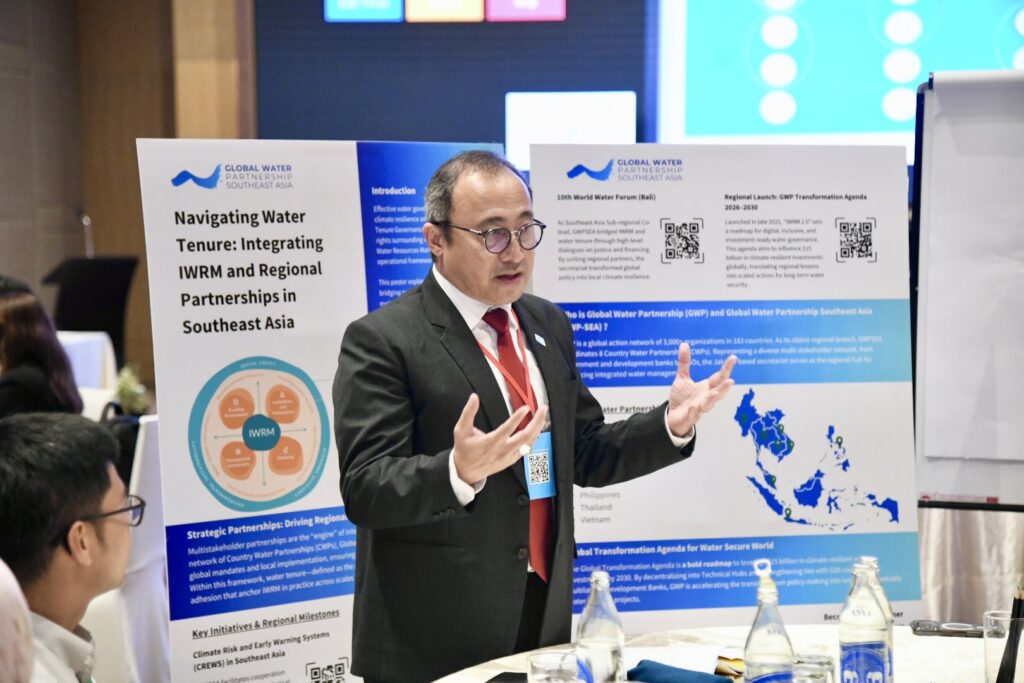
GWP Southeast Asia in the discussion on the Regional Dialogue from Asia © GWP-SEA, 2026
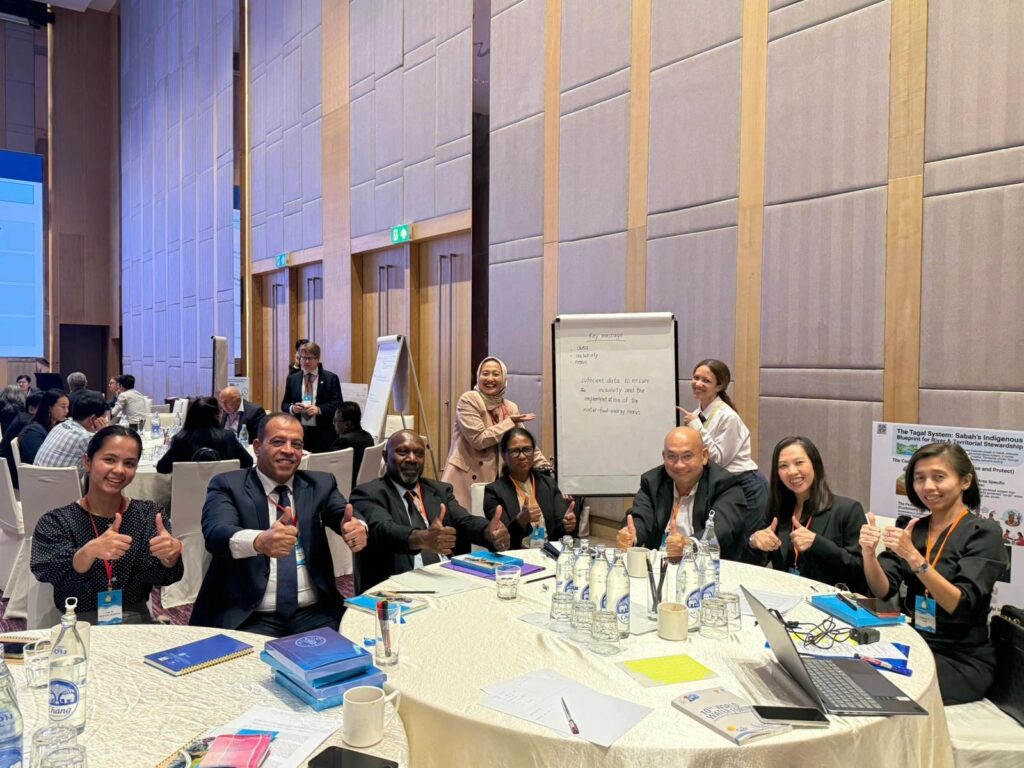
On the second day, the focus shifted toward multi-sectoral collaboration and future action. Panels discussed the “Youth Agenda,” gender perspectives, and the necessity of climate-resilient water systems due to increasing scarcity and environmental change. Representatives from Indonesia, Pakistan, Bhutan, Viet Nam and various regional networks, highlighted the importance of data-based allocation systems and transparent institutions to manage competing water demands. These conversations highlighted the necessity of inclusive governance in the face of demographic pressures and climate variability.
The dialogue concluded with a consolidated call for action and a presentation of the next steps toward the 2026 Global Dialogue. By fostering cross-sectoral partnerships and capturing diverse regional priorities, the event has laid the groundwork for more integrated and context-responsive water tenure. Participants were encouraged to continue their engagement, ensuring that the insights gathered in Bangkok directly inform the development of global standards for responsible water tenure.
“Dialogue is not just a verb, but an active action title,” stated Alex Simalabwi, CEO of the Global Water Partnership Organisation (GWPO).
In his closing remarks, Alex further urged a shift toward inclusive governance that moves beyond mere “paper rights” to protect the world’s most vulnerable populations.