
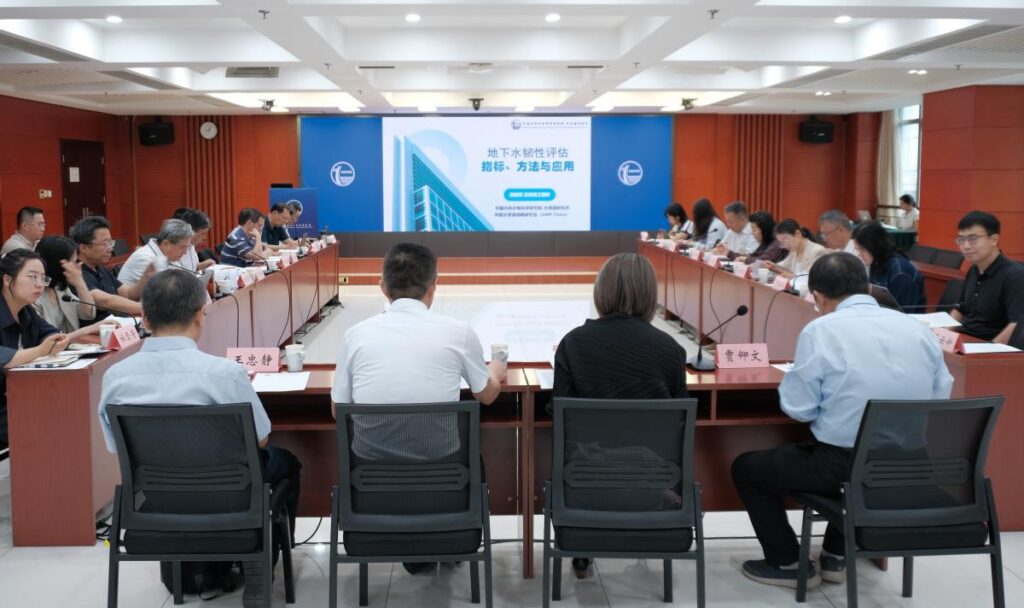
On June 12, 2026, the seminar themed Groundwater Resilience Enhancement and Water Management Practices for Climate Change Adaptation was held in Beijing, hosted by Global Water Partnership China (GWP China), supported by Environmental Defense Fund (EDF) Beijing Representative Office. Industry experts and practitioners gathered to conduct in-depth discussions on groundwater resilience improvement and governance practices amid climate change, building consensus and clarifying directions for the sustainable utilization of groundwater resources.
Leaders and representatives from partner institutions delivered speeches at the meeting. The seminar consisted of two major sessions: special keynote presentations and interactive discussions. Combining the current status of groundwater at home and abroad, relevant policies and regulations, as well as local governance practices, participants reviewed progress, sorted out existing challenges, and reached a number of consensuses and work initiatives.
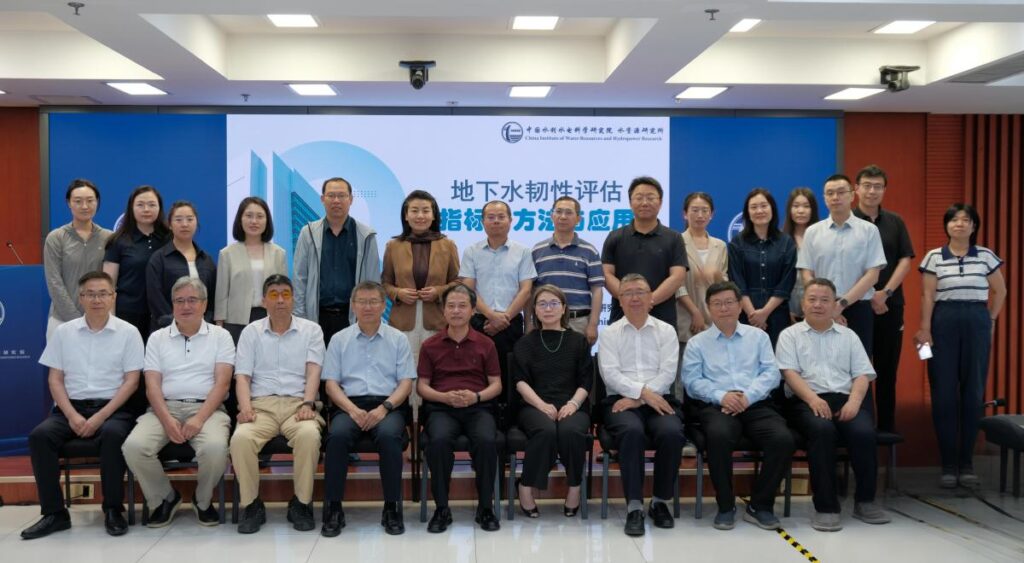
Group Photo of Invited Specialists
I. Core Judgments and Views from Expert Presentations
(1) Dual Pressures on the Global Groundwater System
Against the backdrop of intensifying global climate change and rising water consumption, the recharge and discharge dynamics of groundwater have grown increasingly complex. Existing management models are insufficient in addressing long-term and compound risks, featuring poor adaptability and weak resilience. This has led to reduced groundwater renewal capacity and weakened water supply security. Climate change and human activities are the two major factors affecting the stability of groundwater systems, as well as the core starting points for studying and assessing groundwater resilience.
(2) Theoretical Framework of Groundwater Resilience and Achievements of Local Practices
A multi-dimensional evaluation framework and indicator system for groundwater resilience were put forward, covering inherent resilience, stress resilience, recovery resilience and governance resilience, which can be adopted to assess resilience levels via professional methodologies. Current research still faces challenges including poor universality of evaluation indicators, distinct regional hydrogeological differences and difficulties in accessing basic data. Targeted optimization of indicators based on regional characteristics was proposed as a key direction for follow-up work.
A preliminary resilience assessment was conducted based on the actual conditions in Hebei Province, analyzing the evolutionary features of the four types of resilience. The results verified that the full-chain comprehensive governance system established in Hebei has effectively boosted groundwater resilience. It is confirmed that scaling up water conservation and optimizing water supply structure through water source replacement serve as key measures to enhance groundwater resilience.
(3) Core Content and Operation & Management Requirements of the Groundwater Reserve System
China has developed various types of groundwater reserves, which are closely integrated with underground reservoir construction, water source protection and ecological conservation, and can effectively mitigate water resource risks triggered by climate change. Site selection for groundwater reserve areas requires comprehensive consideration of multiple factors, with differentiated standards applied to mountainous and plain regions. The operation of reserve areas involves water intake, artificial recharge, monitoring, daily maintenance and other work. It is essential to strengthen water quality protection, dynamic regulation and scientific water replenishment to ensure long-term operational effectiveness. On-site videos were also played to showcase the achievements of groundwater ecological restoration.
(4) Comprehensive Treatment of Groundwater Over-extraction and Future Development
Long-term over-extraction of groundwater in North China has triggered a host of ecological problems. Targeted comprehensive governance measures have been rolled out, including zoned regulation, standardized water intake management, and the development of digital management platforms. Meanwhile, innovative approaches such as artificial groundwater recharge and utilization of non-conventional water resources have been actively explored。
Going forward, priority will be given to the utilization of non-conventional water resources, research and development of water-saving technologies, and combined water recharge via multiple water sources, so as to consolidate governance outcomes and enhance the capacity to cope with drought risks.
II. Countermeasures and Suggestions from Panel Discussions
Focusing on prominent problems in current groundwater management and the practical application of groundwater resilience evaluation, participating experts put forward targeted suggestions:
- Implement refined categorized and zoned management;
- Improve cross-department and cross-regional coordination mechanisms and break barriers for data sharing;
- Further integrate groundwater protection with territorial spatial governance and ecological restoration;
- Balance regular water use and strategic water reserve needs to strengthen the overall anti-risk capacity of water resources;
- Accelerate the transformation and application of research findings;
- Simplify operational procedures in light of on-site conditions, so that academic research can better support grassroots governance.
III. Overall Consensus of the Seminar
The seminar summarized the achievements in groundwater protection and over-extraction control across China, analyzed challenges in scientific research and governance, and clarified the development priorities for groundwater management amid climate change.
All participants agreed that China has improved relevant laws, regulations and policies and upgraded groundwater management capabilities. Nevertheless, confronted with the dual pressures of climate change and human activities, it is imperative to further deepen research on groundwater resilience, and align relevant studies with new management requirements such as improving the groundwater reserve system. Efforts should be made to strengthen the anti-interference and self-recovery capacity of groundwater systems, advance the sustainable utilization of groundwater resources through multi-pronged approaches, and provide solid support for addressing climate change and safeguarding national water security.