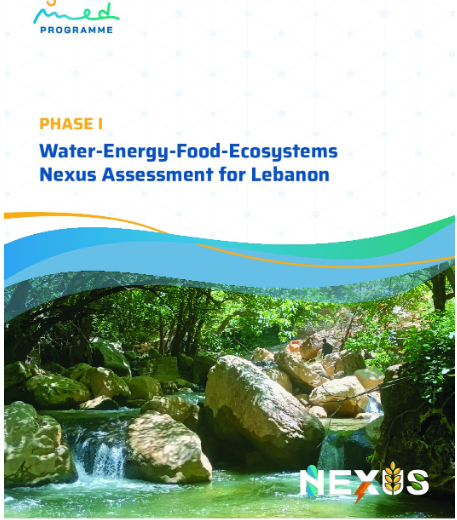
This National and sub-National Component focuses on the facilitation of WEFE Nexus Dialogues in three countries: Albania,Lebanon and Morocco. It involves solid technical work to analyze linkages among the WEFE sectors, assess potential trade-offs and identify solutions that will foster security of supply for these resources and efficiency in their use, while reducing impacts and risks on ecosystems. The outcomes of the technical work serve as the basis for multi-stakeholder consultations and exchanges, offering a process for reconciling possible differences towards the identification of priority inter-sectoral concerns, i.e. among two or more of the Nexus sectors.
Addressing Nexus issues affecting priority coastal zones of the Mediterranean Large Marine Ecosystems
Overall, Component 2 facilitates integrated policy making and management in the above-mentioned areas by promoting innovative tools and technical interventions, customised to each area’s needs aiming for the replication of such activities in other countries and scales. To this end, a number of activities are being implemented:
- Facilitation of the work of existing or establishment of inter-institutional bodies to function as Steering Committees of the Nexus Dialogues
Development of Stakeholder Analysis - Development of in-depth Nexus Assessments (Phase I and II),
- Development of Nexus strategies and Action Plans
New or Existing inter-institutional bodies steering the development of Nexus Assessments and Strategic Documents
In each focus area, WEFE Nexus Dialogues are guided and oriented by inter-sectoral Bodies composed of representatives from institutions and other stakeholders. They are responsible for guiding the Nexus Policy Dialogue process and the preparation of Nexus Strategies and Action Plans.
In Lebanon an inter-ministerial Nexus committee, that has been established in the frame of the project and is comprised of representatives from all Nexus-related Ministries and other relevant institutions, guides the above process.
Development of Stakeholder Analysis
In the beginning of each Nexus Dialogue, a detailed Stakeholder Analysis indicates which stakeholders are directly influenced and can be influenced by decisions taken relating to the management of natural resources mapping their perceptions and ideas. The document, which is the basis for the Nexus Dialogues process and the Nexus Assessments, maps all relevant Nexus-related stakeholders, including public institutions, gender organisations and other actors directly involved with water, energy, food, environment and climate change, enabling conditions for effective cross sectoral integration and policy planning assessed.
Nexus Assessments (Phase I & II) & Nexus Policy Dialogues
During Phase I of the Nexus Assessments, all available data on the water-energy-food and ecosystems sectors of each focus area is gathered and processed, and interlinkages, synergies and trade-offs among the sectors are analysed. Together with the Stakeholder Analysis, a Governance Analysis outlines the roles and responsibilities of the regional, national and international institutions and indicates the efficiency of existing management mechanisms.
All of these findings and Reports are discussed in detail in a series of multi-stakeholder consultations, whereby key stakeholders provide input, indicate priority intersectoral-concerns and exchange views on the above findings depending on their expertise and knowledge. The synthesis of all this information as well as potential solutions form part of the Nexus Assessment Report, providing a baseline for Phase II. Essentially, it is a in-depth Assessment and quantification of the Nexus interlinkages focusing on priority interventions as these have been indicated after the completion of Phase I.
This process, entails data collection and modelling to quantify the physical resources necessary as well as the linkages among resources to highlight constraints and identify corrective actions, different scenarios that are defined and explored during the modelling phase, analysis focused on issues of priority as these have been identified in Phase I. The outcomes of this analysis will provide the content of the Phase II Nexus Assessment Report. Stakeholders will discuss and evaluate the results, review the recommendations and identify means for the recommendations to be put into practice.
Development of Nexus Strategies and Action Plans
The development of Strategies or Action Plans for each one of the focus areas are the key outputs of the Nexus Dialogues. The documents indicate specific solutions – as these have been identified for each country- that should be implemented and guides their incorporation into national and/or regional policy making. These documents form the synthesis of the:
- information generated by the Nexus Assessment;
- views and opinions of the stakeholders as identified through the Stakeholder Analysis;
- outcomes of the Nexus Dialogue;
- guidance by the Steering Committees.
This Component is expected to:
- Identify linkages/benefits/trade-offs among sectors, quantifying those that are of priority at the level possible and assessing the trends under different developmental scenarios leading to concrete suggestions for synergic action in the field of policy making, and management as means towards optimal use of natural resources for sustained growth and for protecting the Mediterranean LME.
- Identify concrete steps and actions for the application of solutions identified through the Nexus assessments and dialogues as well as for the incorporation of the Nexus approach in national policy formulation and decision making for natural resources management.
- Identify priority nexus related interventions.
- Foster input of stakeholders in the Nexus Assessments and the identification of solutions as well as ownership of the process for their development and the resulting outcomes.
*For more on Nexus Assessment Phase I of Albania, see here.
For related activities see below links: