
Global Water Partnership Central and Eastern Europe (GWP CEE) was established in 1998 as part of the 13 regions of the global network dedicated to enhancing integrated water management in the CEE region. It brings together nine Country Water Partnerships and more than 200 partner organizations across 15 countries in Central and Eastern Europe.
GWP CEE is an open and inclusive international network uniting organizations involved in water resources management, including government institutions, research and academic bodies, non-governmental organizations, civil society actors, as well as the private sector. Through cooperation and dialogue, the network supports the implementation of Integrated Water Resources Management (IWRM) to strengthen sustainable development.
CEE Key European Water Region
The mission of GWP CEE is to support countries of Central and Eastern Europe in their efforts towards sustainable development, protection, and management of water resources, while strengthening regional cooperation and contributing to global water-related goals.
GWP CEE acts as a neutral platform, knowledge facilitator and catalyst for change, supporting countries and partners in addressing complex water challenges in an integrated and sustainable manner.
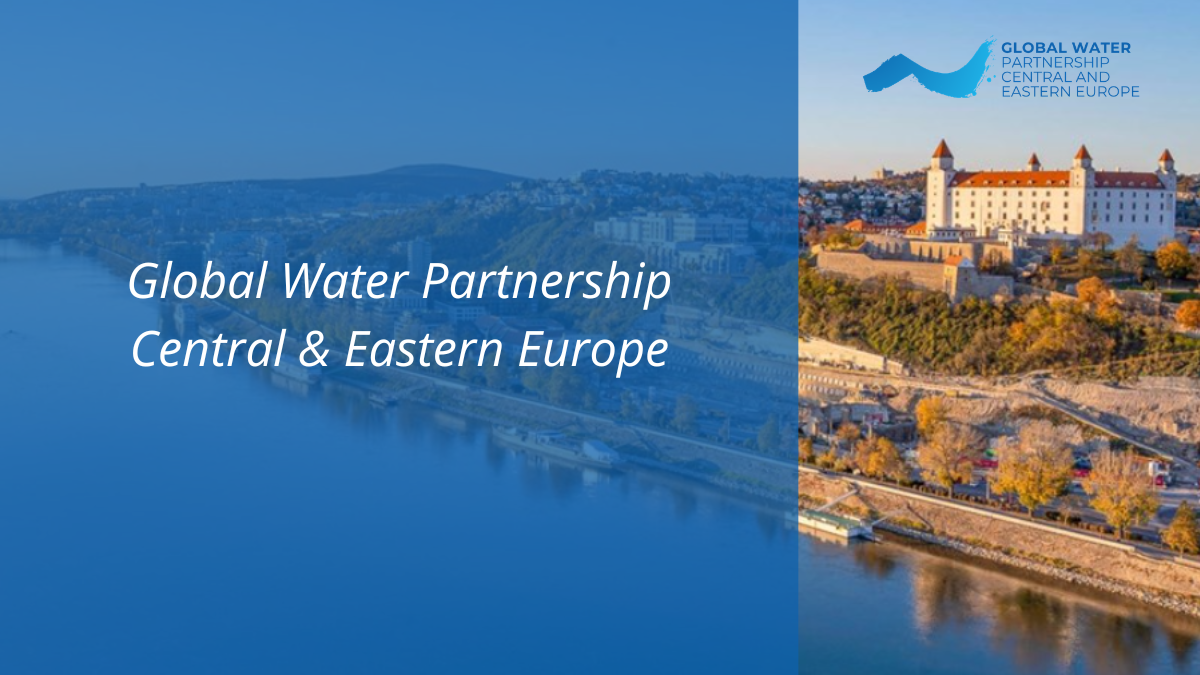
The Central and Eastern Europe (CEE) region represents a significant share of Europe’s population and territory and plays a strategic role in the continent’s water system. Located at the intersection of major European climatic zones and major hydrological systems, the region connects upstream and downstream countries, inland and coastal waters, and multiple socio-economic systems.
Central and Eastern Europe is largely situated within two major European sea basins: the Baltic Sea Basin (covering Estonia, Latvia, Lithuania, and parts of Poland) and the Black Sea Basin (encompassing Bulgaria, Hungary, Poland, Romania, Slovakia, and Slovenia) primarily through the Danube River Basin.
As a region highly exposed to floods, droughts, water scarcity, pollution, and the impacts of climate change, Central and Eastern Europe serves as both a frontline and a testing ground for integrated, resilient, and cooperative water solutions. Effective water governance in CEE therefore has implications not only for the region itself, but also for the wider European context.