
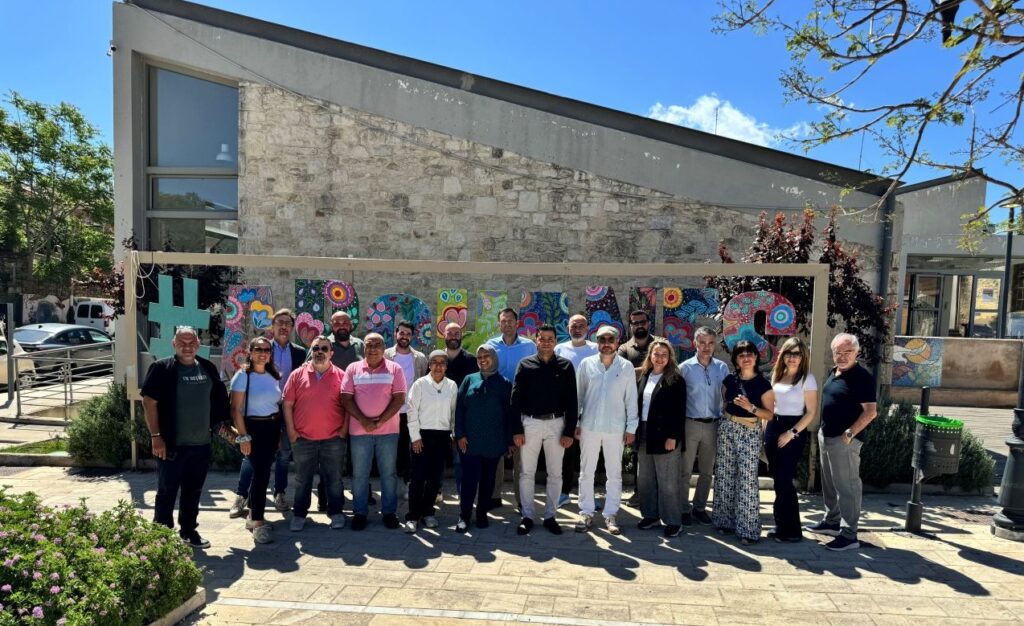
The RESWATER project – “Non-Conventional Water Resources for Resilient Urban Water Management in the Mediterranean” – held its 2nd Project Management Meeting in Archanes, Heraklion, Crete on 13–14 May. Organised by the Global Water Partnership – Mediterranean (GWP-Med) at the Center for Art and Culture, the meeting brought together project partners from Spain, Türkiye, Tunisia, Egypt, Italy, Malta and Greece to review progress and coordinate next steps across the project’s work packages.
Launched under the Interreg NEXT MED Programme, RESWATER responds to intensifying water scarcity in the region, where climate change, population growth, and pressure on limited freshwater resources are placing urban areas at increasing risk. With a total budget of €2.8 million— co-funded by the European Union (89%) and project partners (11%)—the project focuses on strengthening water security and resilience by promoting the use of Νon Conventional Water Resources (NCWR), safe water reuse, and sustainable urban water management practices.
Sessions included a comprehensive overview of progress across all project work packages, providing participants with updates on the project’s implementation. Partners explored activities ranging from the characterization of pilot catchments and stakeholder consultations to the advancement of Living Labs and the growing Community of Practice. Particular attention was given to the design of decentralized Non-Conventional Water Resources demonstration sites and their performance monitoring, alongside the development of Urban Water Management Plans integrating decentralized greywater treatment solutions.
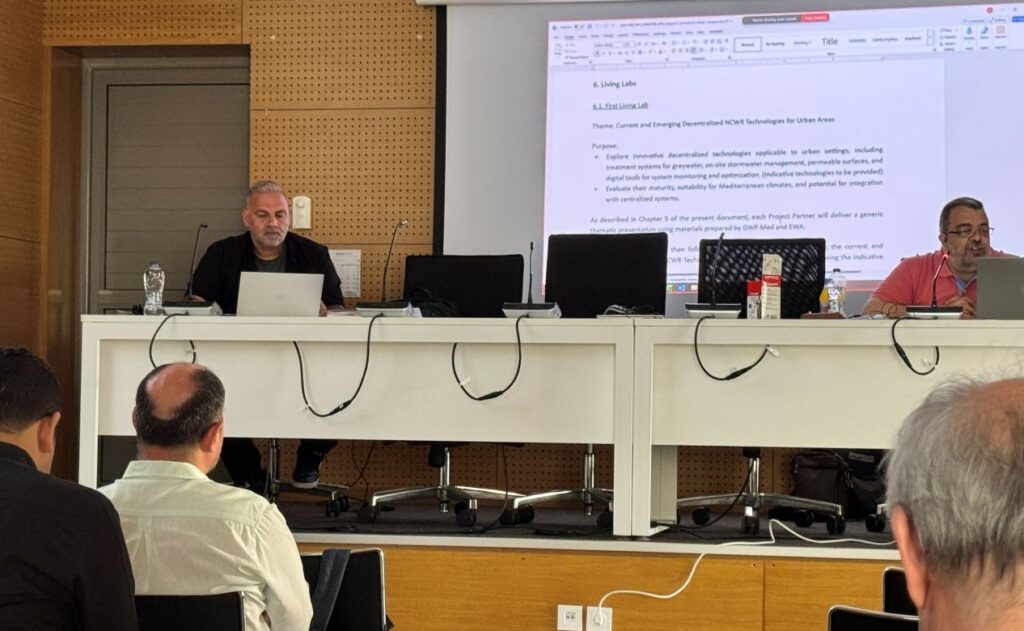
“These thematic areas are not simply technical components of a project, but essential tools for strengthening our societies against climate change through sustainable water management and increased local resilience,” noted Mr. Michalis Markatatos, Special Consultant to the Mayor on behalf of the Mayor of Archanes, Mr. Manolis Kokosalis in his welcoming address to participants. Stressing the importance of the initiative for the island, he added that Crete is already experiencing the impacts of water scarcity and climate pressure firsthand, making projects such as RESWATER critical for shaping “a more resilient future for the Mediterranean.”
The discussions also touched on policy assessment, dissemination, and communication efforts, ensuring the project’s impact extends beyond its technical scope. Throughout the meeting, partners engaged in constructive exchanges on coordination and progress, while the Steering Committee convened separately to address emerging challenges, anticipate upcoming issues, and strengthen the project’s visibility and stakeholder engagement.
“RESWATER is not only about testing innovative water solutions, but about building long-term cooperation and practical pathways for Mediterranean communities to adapt to increasing water stress,” said Dr. Nikos Skondras, Senior Programme Officer at GWP-Med. “The strong engagement of all partners during this meeting demonstrated our shared commitment to delivering tangible, scalable solutions for resilient urban water management.”
By addressing urgent water challenges and fostering cooperation among Mediterranean countries, RESWATER aims to deliver practical, climate-resilient solutions that ensure long-term water security for communities across the region.