
GWP CEE Country News
GWP Romania
Implementation Period: November 2024 – November 2025
Project Type: Nature-based solutions, environmental education, youth engagement
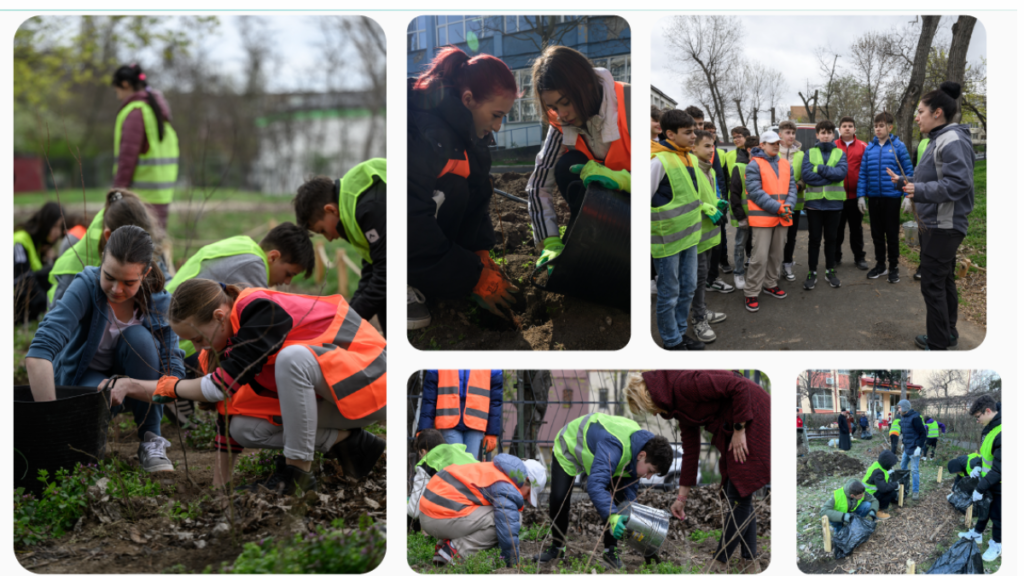
GWP Romania launched the project “Tiny-Forest in the Schoolyard” to enhance urban biodiversity and promote environmental education among youth. The initiative engaged three schools from Galați city: “Mihail Sadoveanu” Secondary School; “Iulia Hașdeu” Secondary School (part of Secondary School No. 16); “Radu Negru” Technological High School. The project combined ecological restoration (planting native vegetation and implementing rainwater-based irrigation systems) with non-formal environmental education and community participation.
Impact
- 1. Increased ecological awareness and practical skills among students.
- 2. Reinforced collaboration between students, teachers, volunteers, parents, and local authorities.
- 3. Improved biodiversity and climate resilience through urban greening.
- 4. Set the foundation for future scaling and replication in other schools across the region.
Key Activities and Results (Nov 2024 – May 2025)
1. Planning and School Selection
Internal coordination meetings to finalize the project guide, selection criteria, and application procedures. Public call for school participation launched and disseminated via email, press, and social media. Information webinar held with school representatives to explain project goals, requirements, and application steps. Field visits and discussions with applicants and local school staff. Selection of three implementation sites based on technical and ecological criteria.
2. Site Preparation and Technical Coordination
Soil analysis conducted by OJSPA Galați and biodiversity experts. Collaboration with Galați City Hall for official planting permits. Installation of irrigation systems and rainwater harvesting units at “Radu Negru” High School. Ground preparation and compost application at all three locations. Delimitation of planting zones using sustainable wooden markers made by students and volunteers.
3. Educational Workshops and Practical Activities
Introductory workshops on biodiversity and urban tiny-forests held in all three schools, involving students aged 11–18 (total participation over 250 students). Second workshop on soil preparation and substrate planning, with hands-on activities (100 students and 18 volunteers involved). Third workshop focused on planting native trees and shrubs. Practical pH analysis activity.
4. Tree Planting and Infrastructure Installation
Over 1,950 native trees and shrubs planted. 345 herbaceous plants added for increased biodiversity. Informational panels and insect hotels installed at each location. Soil supplemented with fertile black earth for better rooting and vegetation development.