
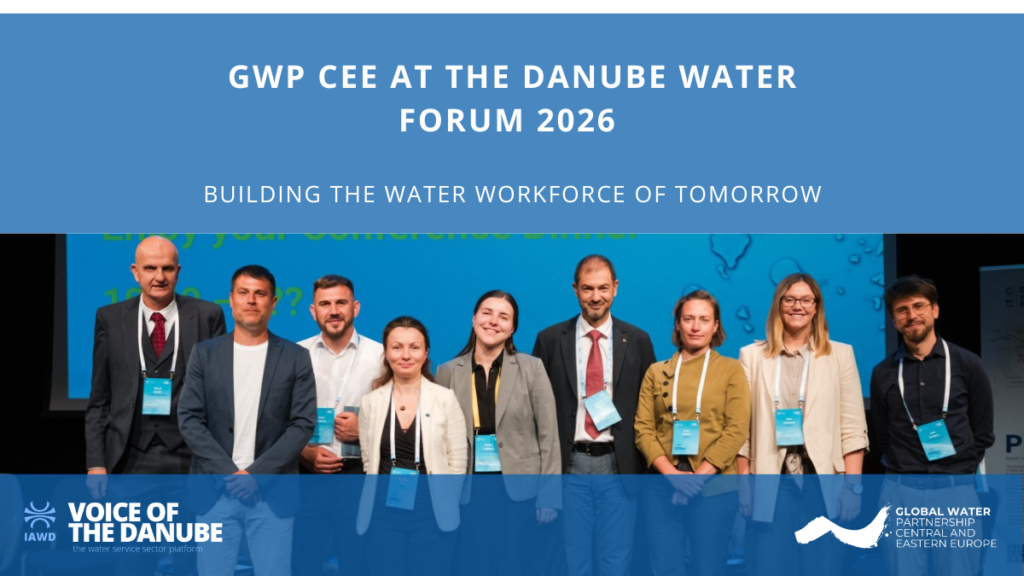
The Global Water Partnership Central and Eastern Europe (GWP CEE) actively participated in the Danube Water Forum 2026 in Sofia, organized by the International Association of Water Supply Companies in the Danube River Catchment Area (IAWD). This year’s forum brought together utilities, policymakers, researchers, and young water professionals from across the region to address urgent challenges in the water sector.
One of the most dynamic discussions took place during the session “Securing Skills and Talent: Building the Water Workforce of Tomorrow”, which focused on a growing structural issue in the sector: a significant share of the current workforce is approaching retirement, while the inflow of new talent remains insufficient.
Moving beyond symbolic youth engagement
A central message of the session was the need to move beyond token participation of young professionals and instead integrate them meaningfully into decision-making processes.
IAWD highlighted its approach to strengthening youth inclusion by supporting Young Water Professionals (YWPs) from across the Danube region, enabling their active participation in the forum. This included preparatory workshops, structured networking opportunities, and shared moderation roles during high-level sessions, ensuring that young professionals were not only present, but actively shaping the discussions.
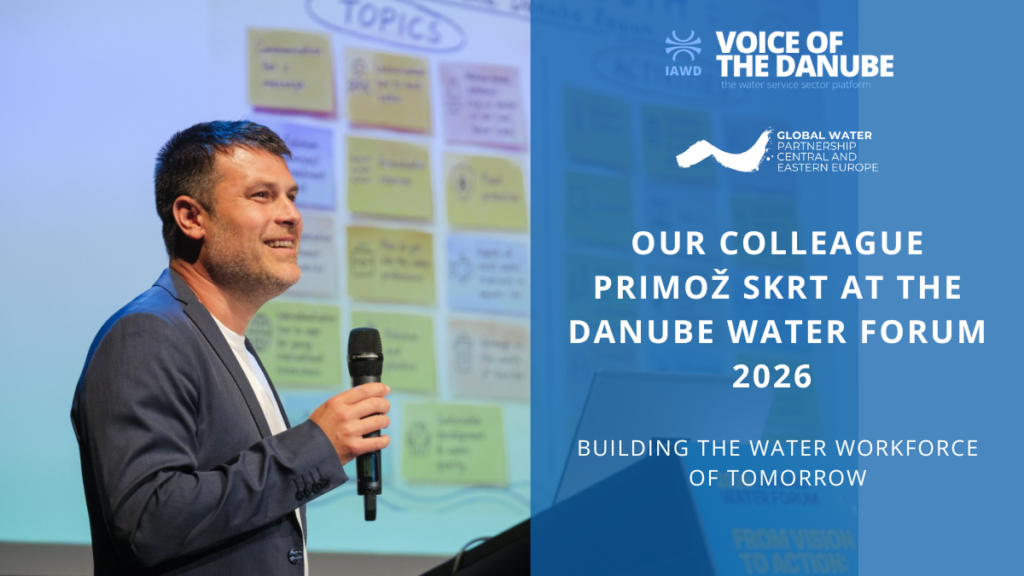
Within this context, GWP CEE contributed to the debate by emphasizing the importance of transforming youth engagement from passive participation into active institutional ownership. As noted by GWP CEE representative Primož Skrt, young people are highly motivated by the climate and environmental crisis, but often feel disconnected from slow-moving institutional structures. This highlights the need for more agile, inclusive, and innovation-friendly systems within the water sector.
Key insights from the session
The discussion brought together perspectives from utilities, industry, academia, and youth networks, offering a broad view of both challenges and emerging solutions:
- Industry–academia collaboration: Examples showed how early practical exposure—such as student placements in operational utility environments—can successfully transition students into long-term careers in the water sector.
- Organizational culture as a retention factor: Beyond salaries, workplace culture emerged as a decisive factor in attracting and retaining talent. Hierarchical structures and limited openness to innovation were identified as barriers for younger professionals.
- Water literacy from an early age: Initiatives introducing water education in schools were presented as a long-term strategy to strengthen future resilience and awareness.
- Capacity building and access to opportunities: Training programmes, conference access, and soft-skills development were highlighted as effective tools to bridge the gap between education and employment.
- European-level coordination: The discussion also pointed to the role of broader frameworks, such as emerging European initiatives aimed at anticipating skills gaps and supporting coordinated capacity development.
A shared challenge for the region
A clear message emerging from the forum was that the Danube region does not face a lack of motivated young professionals. Rather, the challenge lies in adapting institutional systems to better absorb their energy, ideas, and expertise.
Strengthening the water workforce will require coordinated action across education, utilities, and policy frameworks, as well as sustained investment in mentorship, skills development, and meaningful participation of young professionals in decision-making processes.
GWP CEE commitment
GWP CEE remains committed to supporting initiatives that strengthen capacities and empower young professionals in the water sector. Through regional cooperation, knowledge exchange, and project implementation, GWP CEE continues to contribute to building a more resilient and sustainable water future across the Danube Region.
The discussion in Sofia reaffirmed a shared understanding among partners: securing the future of the water sector is not only about infrastructure and technology, but also about people, skills, and the systems that enable them to thrive.