
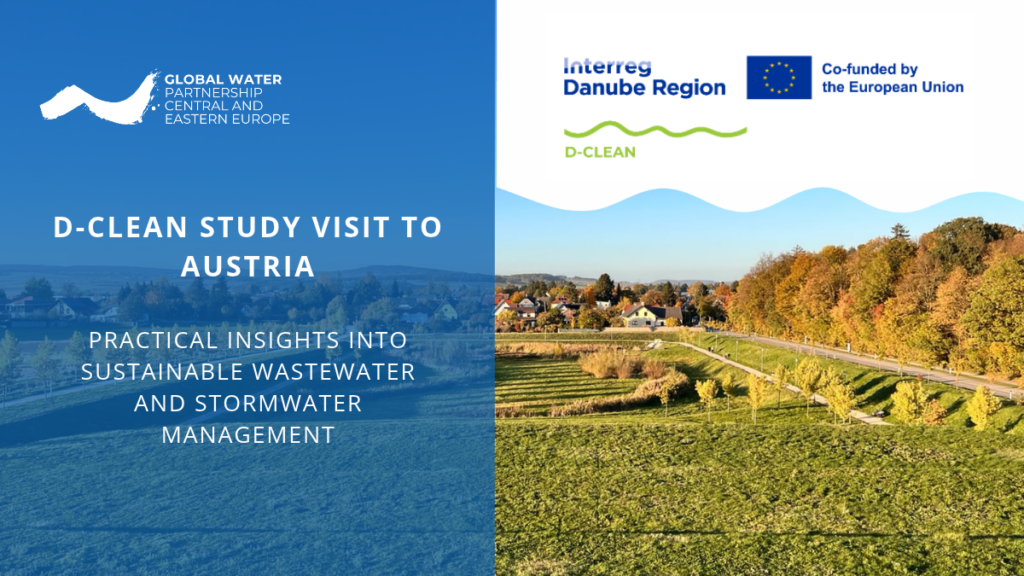
On 27 October 2026, D-CLEAN project partners participated in a study visit to Austria, organised by our project partner BOKU University in Vienna. The visit provided an opportunity to explore practical examples of decentralised wastewater treatment and innovative approaches to sustainable stormwater management.
Small-scale wastewater treatment plants in Oberndorf an der Melk
The first part of the study visit focused on four small-scale wastewater treatment plants (WWTPs) in Oberndorf an der Melk. Participants had the opportunity to explore different treatment technologies, their operational requirements and their potential application in small municipalities and rural communities.
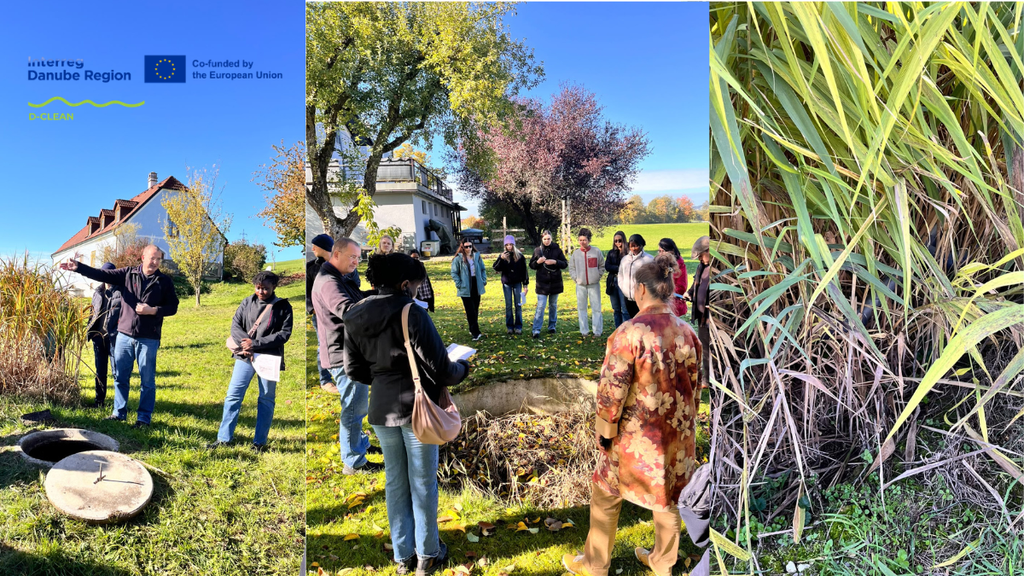
One particularly interesting example was a community-owned wastewater treatment plant using Sequencing Batch Reactor (SBR) technology, serving 24 households with a capacity of 80 population equivalents (PE).
One of the facility’s owners explained not only how the system operates but also how the local community manages it. Residents take turns carrying out regular inspections and maintenance, while more extensive maintenance activities are organised twice a year with the participation of the entire community. Interestingly, these activities are combined with informal neighbourhood gatherings, demonstrating how shared infrastructure can also strengthen community relationships.
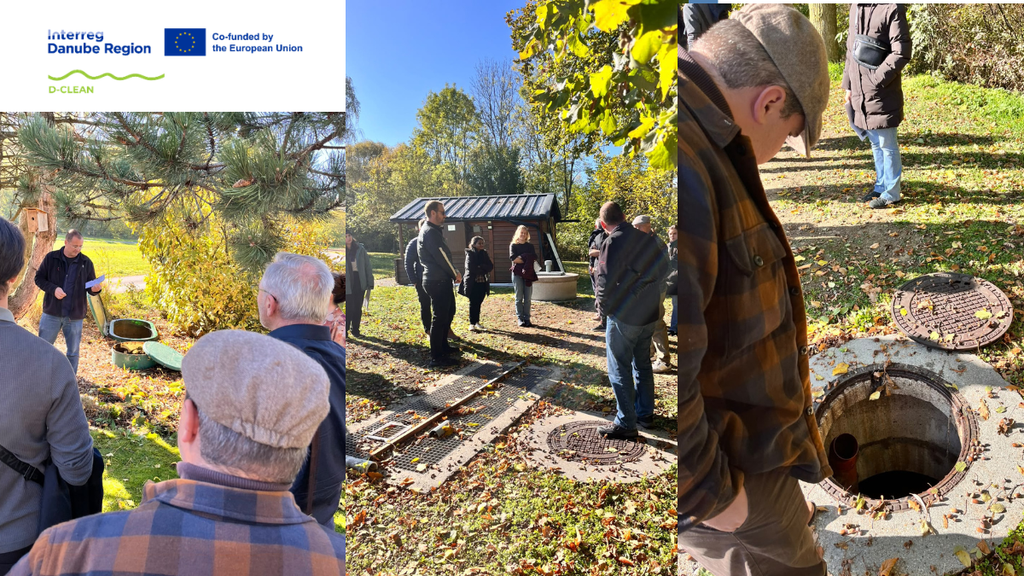
The participants also visited another SBR treatment plant with internal sludge storage and a planted sludge drying bed, serving two households, including a milk-processing facility.
Another example was a vertical-flow constructed wetland, where vegetation helps maintain favourable conditions for microorganisms involved in the wastewater treatment process. During winter, the vegetation also provides an insulating layer that supports the system’s operation.
The final facility demonstrated conventional activated sludge treatment technology adapted to a small-scale application.
Together, these examples highlighted the diversity of decentralised wastewater treatment solutions and the importance of selecting technologies that respond to local conditions and community needs.
Stormwater management in Lower Austria
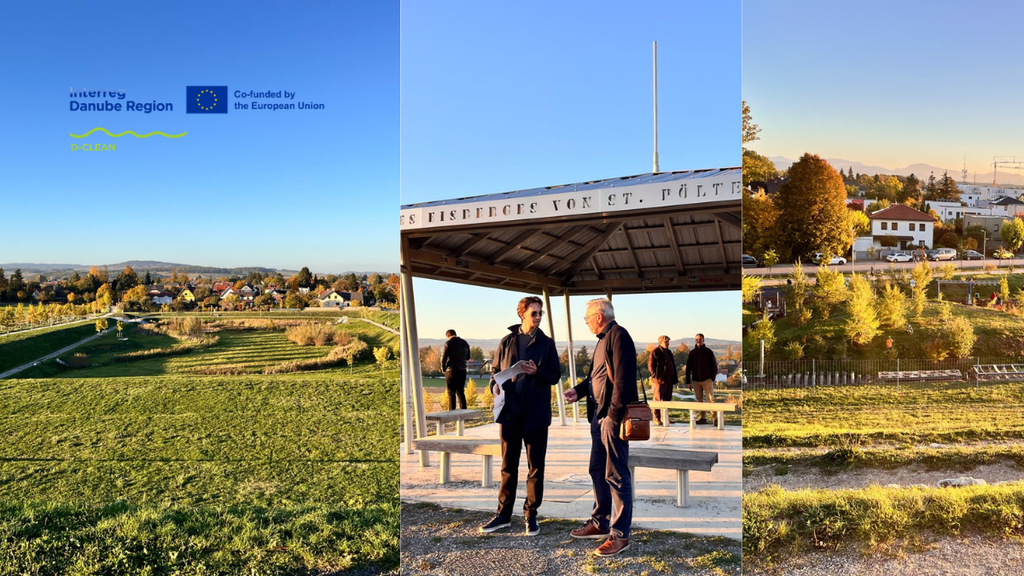
The second part of the programme took place in St. Pölten, where participants were introduced to the Stormwater Management Plan of the Province of Lower Austria and visited a practical implementation site.
With climate change contributing to more frequent extreme rainfall events and longer dry periods, sustainable stormwater management is becoming increasingly important. Such measures aim to reduce the risks of local flooding, overloaded sewer systems and urban heat islands, while supporting a more balanced local water cycle.
The visited site provided an excellent example of how stormwater management infrastructure can be integrated into attractive and multifunctional public spaces.
With planted trees, a children’s playground and park areas, the site functions as a pleasant green recreational space for local residents. Beyond its primary technical purpose, it also provides aesthetic, environmental and recreational benefits.
This example demonstrated that climate adaptation measures do not have to be purely technical infrastructure. When thoughtfully designed, they can also contribute to greener, more liveable urban environments and improve the quality of life for local communities.
The expert presenting the site also emphasised the importance of involving stakeholders and the public from the earliest stages of planning and implementation. Open communication, explaining the benefits of proposed measures and building community support are essential for successful implementation and long-term sustainability.
Inspiration for the D-CLEAN project
The study visit provided valuable practical insights directly relevant to the objectives of the D-CLEAN project, which focuses on improving water quality in the Danube River Basin through sustainable and nature-based approaches to wastewater treatment and stormwater management, particularly in small settlements and rural areas.
The project also aims to strengthen professional capacities, facilitate knowledge exchange and support municipalities and other stakeholders in planning and implementing sustainable water management solutions.
The examples visited in Austria demonstrated that decentralised wastewater treatment systems can provide effective and sustainable solutions for smaller communities, while their long-term success depends not only on appropriate technologies but also on active community involvement.
Another important takeaway was the potential to combine stormwater management measures with high-quality public spaces, green infrastructure and biodiversity enhancement.
The knowledge and experiences gained during the study visit will contribute to the exchange of expertise among project partners and provide valuable inspiration for future activities and pilot areas within the D-CLEAN project.
We would like to sincerely thank BOKU University for the excellent organisation of the study visit, the opportunity to learn directly from facility operators and experts, and the valuable exchange of practical experiences. We look forward to continuing our successful cooperation and working together towards the objectives of D-CLEAN.
Want to learn more about sustainable wastewater treatment solutions?
Our upcoming D-CLEAN Solutions Catalogu will provide an overview of wastewater treatment technologies, including nature-based solutions, their benefits, limitations and practical applications.
Stay tuned! The catalogue will be published soon. Follow GWP CEE on our website and LinkedIn to be among the first to discover it and stay updated on our project activities.
The D-CLEAN project is implemented within the Interreg Danube Region Programme and co-funded by the European Union.