
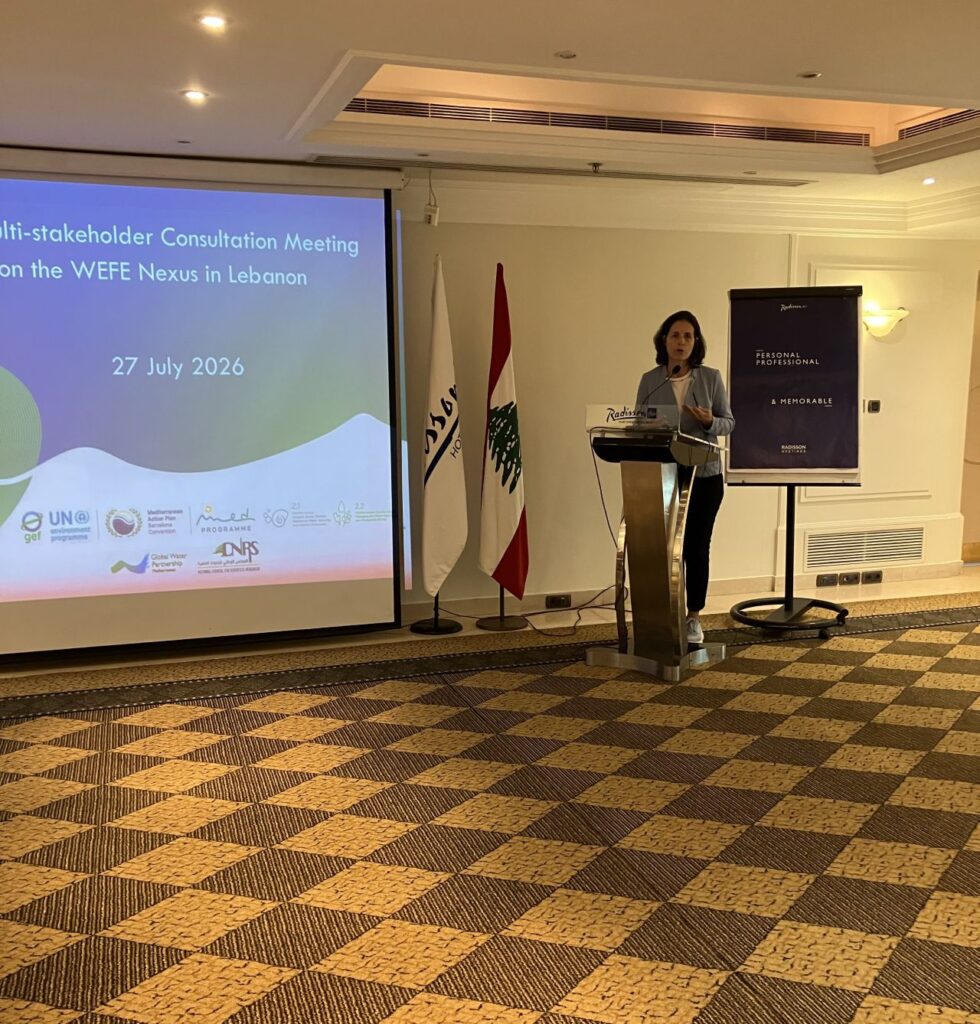
How can Lebanon manage its water, energy, food and ecosystems as one interconnected system? And what solutions can deliver benefits across sectors while strengthening resilience and sustainable development?
These questions were at the heart of the 3rd Multi-Stakeholder Consultation Meeting on the Water-Energy-Food-Ecosystems (WEFE) Nexus, held on 27–28 July 2026 in Beirut.
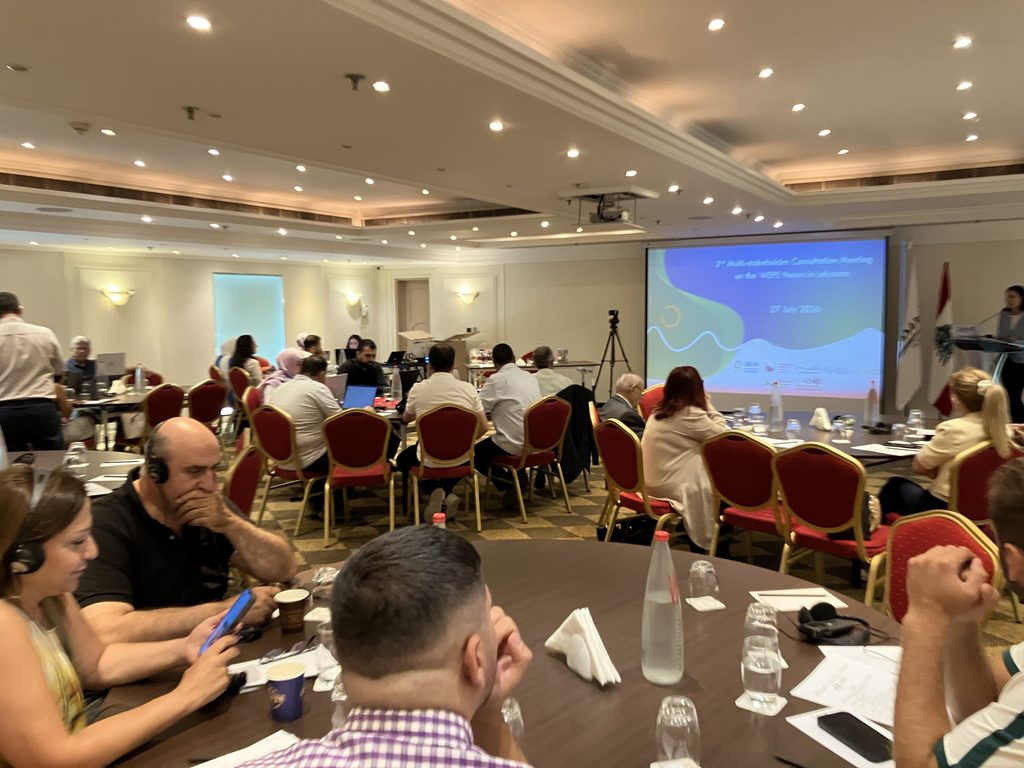
Organised by the Global Water Partnership-Mediterranean (GWP-Med) as part of the GEF UNEP/MAP MedProgramme, the two-day meeting brought together representatives from government institutions, municipalities, farmers’ associations, NGOs, universities, research centres and other stakeholders to discuss the findings of Lebanon’s Draft WEFE Nexus Assessment – Phase II and help shape priorities for the years ahead.
From sectoral challenges to integrated solutions
Lebanon’s water, energy, food and ecosystem sectors are closely interconnected. Decisions in one sector can have consequences for the others — making coordinated planning increasingly important in the face of resource pressures and climate change.
The first phase of Lebanon’s WEFE Nexus Assessment, carried out in 2022–2023, provided a national diagnosis of these interdependencies. It highlighted challenges including chronic water scarcity, inefficient irrigation, high agricultural energy dependency, land degradation and weak coordination between sectors.
It also pointed to important gaps in data and capacity, particularly in the agricultural and hydrological sectors, which can make integrated planning more difficult.
Building on this work, Phase II moves from national diagnosis towards basin-level analysis, using spatial modelling, suitability analysis and improved data integration to identify potential solutions across five river basins: Abou Ali, Ibrahim, Beirut, Damour and Litani.
Looking towards 2050
The first day of the consultation focused on a key question: which Nexus solutions should be prioritised for the future?
Participants explored the baseline situation in each river basin and reviewed key WEFE indicators before considering how different climate change scenarios could affect water, energy, food and ecosystems. The discussions then moved from analysis to action.
Proposed intervention maps were presented and participants worked in groups to review the suggested interventions, assess their relevance to local needs and identify additional measures.
The objective was not simply to identify individual sectoral solutions, but to consider how interventions could generate co-benefits across the WEFE sectors — contributing to food security, more efficient use of water and energy, sustainable socio-economic development and stronger environmental security.
A shared vision for the Damour Area
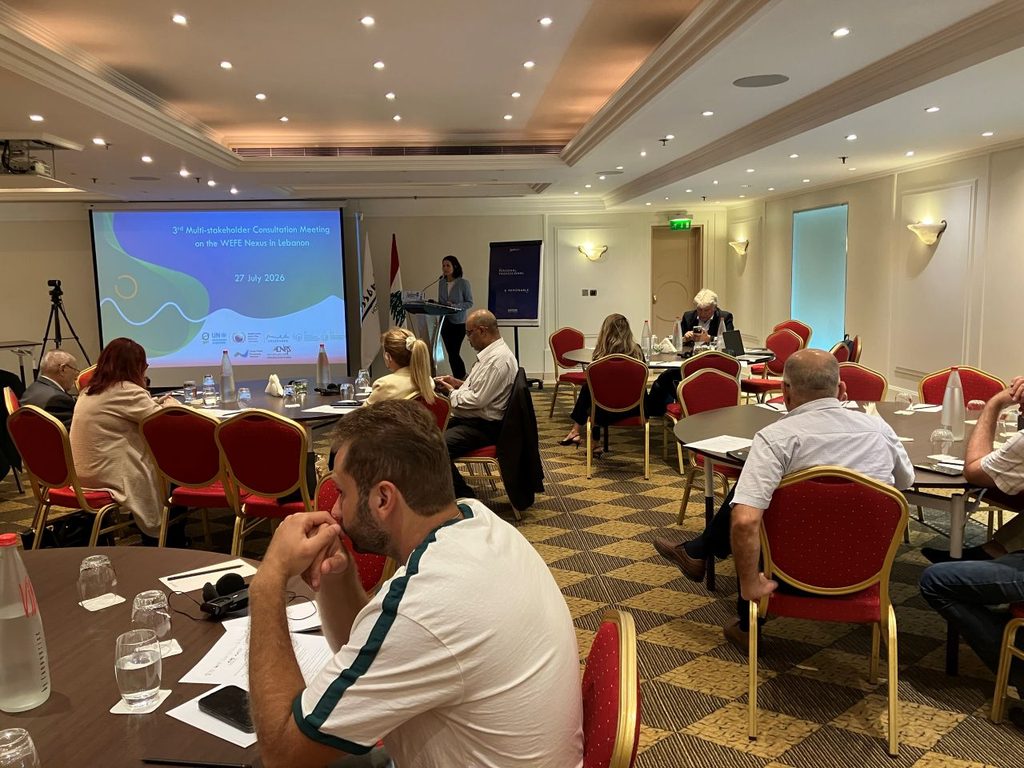
The second day turned the focus to the Damour Area.
Stakeholders were invited to help define a sustainable development pathway for the area, building on proposals developed by the National Council for Scientific Research Lebanon (CNRS-L) through the WEFE Nexus Assessment Phase II and on the draft Damour Area Integrated Management Plan (IMP).
The IMP has been developed under the MedProgramme through a collaborative effort involving GWP-Med, PAP/RAC, PB/RAC and UNESCO-IHP. Its development included three multi-stakeholder consultations and participatory Climagine foresight workshops, ensuring that local perspectives contributed to the process.
During the consultation, participants first reviewed the key challenges facing the Damour Area. They then considered a proposed vision for its future, informed by feedback from previous stakeholder engagements.
Finally, through group work, they prioritised intervention objectives for the area, helping to identify the actions that could have the greatest relevance for its sustainable development.
Turning dialogue into decisions
The consultation was designed as more than an exchange of views. It provided stakeholders with an opportunity to test findings, contribute local knowledge, challenge priorities and help shape the solutions proposed for their areas.
The priorities emerging from the discussions will be presented to relevant authorities alongside the Damour Area IMP and the WEFE Nexus solutions for the basin, providing evidence and stakeholder perspectives to support future planning and decision-making.
With participants representing different sectors, institutions and generations — including women and men, young professionals and experienced experts — the consultation reflected the diversity of perspectives needed to address complex resource challenges.
Lebanon’s WEFE Nexus process is ultimately about recognising that water, energy, food and ecosystems cannot be managed in isolation. By bringing stakeholders together and connecting evidence with local knowledge, the process is helping build a stronger foundation for integrated planning and more sustainable development towards 2050.
The next step is to turn these shared priorities into action.