
National experts and representatives from across the Drin River Basin gathered in Tirana on 19–20 November 2026 for a Capacity Building Workshop on International Water Law. Organised under the GEF Drin-II Project by the Global Water Partnership – Mediterranean (GWP-Med) in cooperation with the United Nations Economic Commission for Europe (UNECE), the workshop equipped national officials with technical knowledge and practical skills for upcoming legal negotiations. Participating delegations included nominated representatives from ministries responsible for water resources and the environment, alongside officials from foreign affairs and finance institutions.
Formalising Transboundary Cooperation
Building on more than a decade of coordinated action under the 2011 Drin Memorandum of Understanding (Drin MoU) and the Strategic Action Programme, the workshop represented a key step in the process of transitioning toward a legally binding agreement. The legal framework under consideration aims to establish a permanent Drin Basin Commission equipped with a dedicated Secretariat, defined decision-making authority, and sustainable financial mechanisms. It will also strengthen procedural requirements for transboundary environmental impact assessments, water quality standards, and climate adaptation measures aligned with international conventions and EU norms.
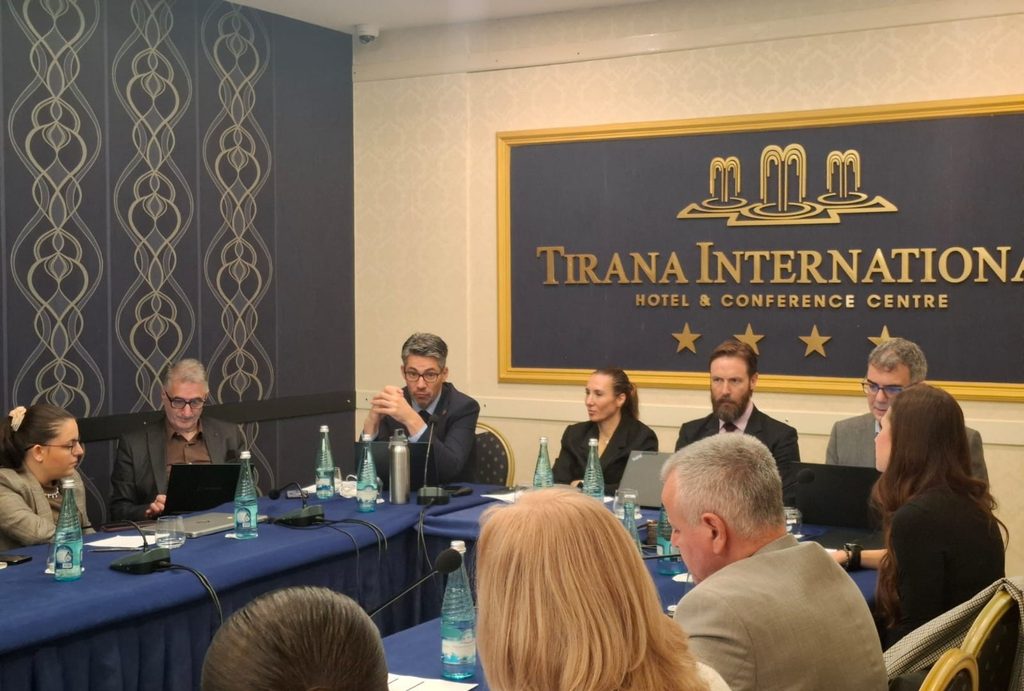
Drin Riparian representatives meet in Tirana for a GWP-Med–UNECE workshop on International Water Law, strengthening national capacities ahead of negotiations towards a basin-wide agreement.
Exploring Legal Norms and Regional Experience
Throughout the event, expert-led sessions examined global and regional legal frameworks, focusing on the 1992 UN Water Convention, the 1997 UN Watercourses Convention, and the 1991 Espoo Convention. Participants evaluated how the substantive principles of equitable and reasonable utilisation, prevention of significant harm, and ecosystem protection apply to shared water resources.
Discussions also addressed EU water legislation—specifically the Water Framework Directive (WFD), Floods Directive, and Groundwater Directive—exploring how transboundary legal instruments support EU accession goals in the Western Balkans. Furthermore, representatives reviewed practical operational lessons from established river basin management bodies, including the Sava River Basin (ISRBC), and Prespa Lake frameworks.
“Building a basin-wide agreement requires more than a shared commitment; it requires a common understanding of the legal principles, institutional arrangements and responsibilities that will underpin cooperation. This workshop marked an important step in preparing the Drin Riparians for enhancement of the cooperation, strengthening their capacity to work towards an agreement that can secure long-term cooperation and provide a stronger institutional foundation for the sustainable management of the basin’s shared resources ultimately contributing to the well-being of its communities”
Mr. Novak Cadjenovic, Project Manager Drin II
Hands-on Exercises: Benefits Assessment and Negotiation Simulation
A central highlight of the workshop was its interactive, practical orientation:
- Assessing Cooperation Benefits: Applying UNECE’s benefit assessment methodology, participants completed a group exercise evaluating 42 potential cooperation benefits spanning economic, social and environmental, regional economic cooperation, peace and security, and governance categories.
- Dispute Settlement Simulation: Utilizing UNECE’s Practical Guide on Developing Agreements, participants stepped into negotiation roles to design dispute settlement mechanisms for a multi-state river basin case scenario. Teams analyzed procedural options ranging from technical commission inquiries to stepped fact-finding and compliance mechanisms, testing them against challenges such as unnotified infrastructure projects, shared groundwater abstraction, and emergency pollution events.
Next Steps Towards the 2027 Negotiations
The workshop served as the initial technical milestone in the overall negotiation process. The shared legal understanding established in Tirana will inform domestic coordination regarding national authorization and ratification procedures, preparing riparian delegations for the formal negotiation meetings scheduled for 2027.