
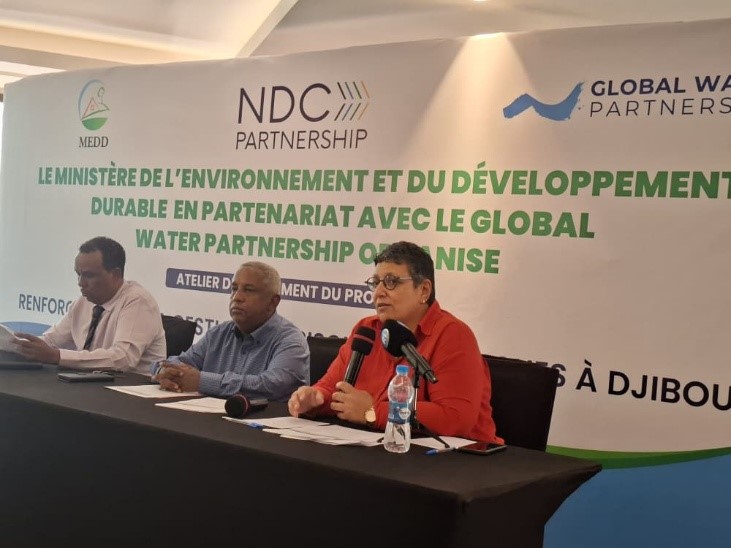
The Global Water Partnership (GWP), in partnership with the Ministry of Environment and Sustainable Development (MEDD), of the Republic of Djibouti, has officially launched the “Strengthening Climate Risk Management” project in Djibouti.
Funded by the NDC Partnership Action Fund (NDC-PAF), the one-year initiative aims to strengthen the country’s resilience to climate change and accelerate the implementation of its Nationally Determined Contribution (NDC) commitments towards the Paris Agreement.
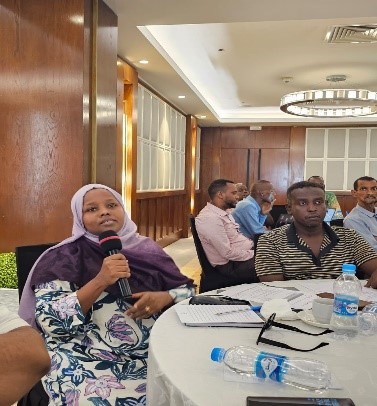
The launch workshop brought together representatives from government institutions, civil society, technical experts, development partners, and other key stakeholders to align around the project’s vision, objectives, implementation approach, and expected outcomes. Climate change remains one of the most pressing challenges facing Djibouti. The country is experiencing increasingly frequent and intense droughts, floods, heatwaves, and sea-level rise, which threaten livelihoods, infrastructure, ecosystems, food security, and socio-economic development.
In his opening remarks, Mr. Dini Abdallah Omar, Secretary General at the Ministry of Environment and Sustainable Development, emphasized that climate adaptation remains a national priority for the Government of Djibouti and is fully aligned with the country’s broader sustainable development agenda.
He noted that strengthening climate resilience requires evidence-based planning, coordinated action, and the active participation of all stakeholders. A key component of the project is the development of climate risk maps that will identify areas most vulnerable to climate-related hazards, including droughts, floods, and extreme heat waves.
“Our longstanding partnership with the Republic of Djibouti is built on a shared commitment to strengthening climate resilience. Through this project, GWP is proud to support the country’s efforts to manage climate risks better and advance its climate goals.” Highlighted Dr. Sarra Touzi, Senior Advisor, Global Water Partnership. She continued to thank the Ministry of Environment and Sustainable Development and the NDC Partnership for their collaboration in bringing this important initiative to fruition.
Recognizing that effective climate risk management depends on strong partnerships, the project will promote collaboration among public institutions, local authorities, communities, civil society organizations, the private sector, and development partners.
This initiative is expected to improve the country’s ability to anticipate climate-related hazards, reduce vulnerability, protect livelihoods, and support sustainable development outcomes.
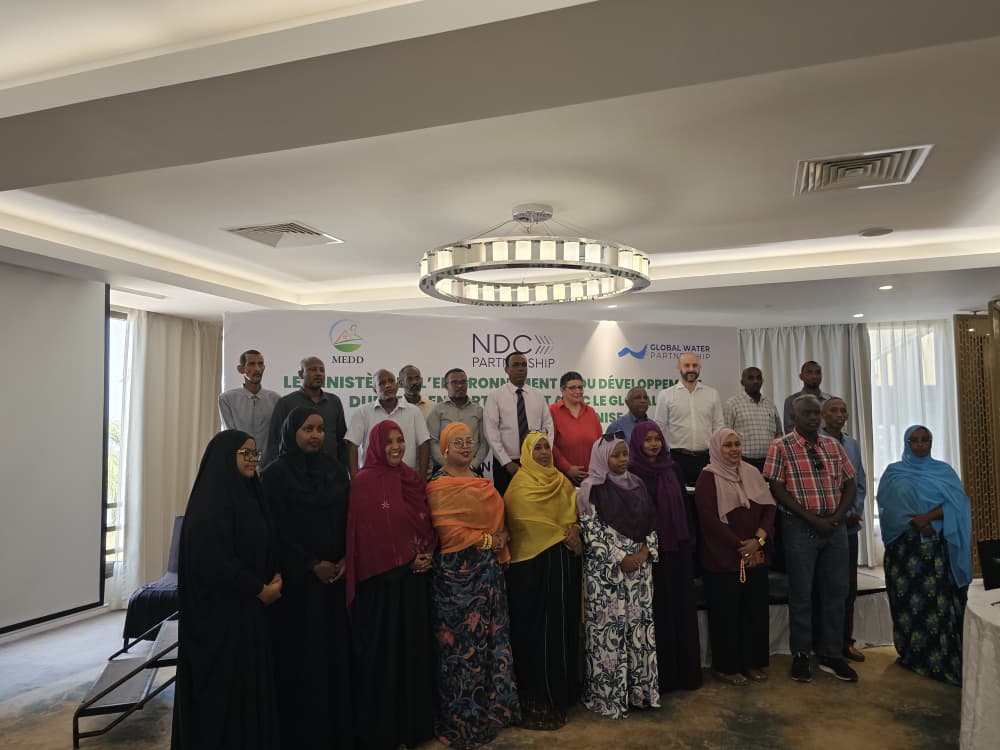
Participants during the launch of the Strengthening Climate Risk Management in Djibouti