
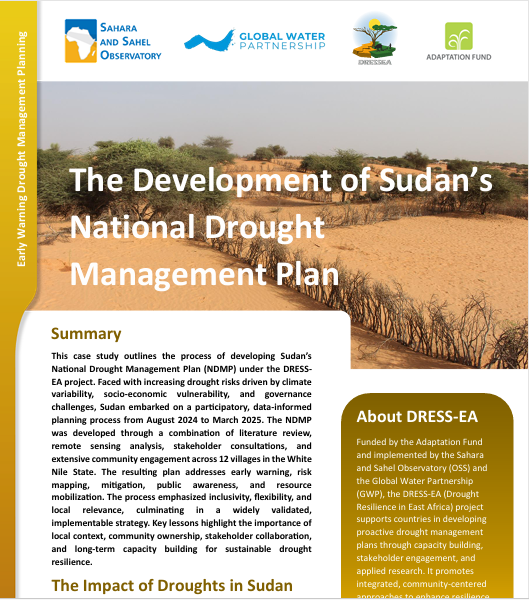
This case study describes the development of Sudan’s National Drought Management Plan (NDMP) under the DRESSEA project. In response to growing drought risks driven by climate variability, socio-economic vulnerability, and governance challenges, the plan was developed between August 2024 and March 2025 through literature reviews, remote sensing, stakeholder consultations, and community engagement across 12 villages in White Nile State. The NDMP focuses on early warning, risk mapping, mitigation, public awareness, and resource mobilization. It emphasizes inclusivity, local relevance, and flexibility, resulting in a validated, implementable strategy.
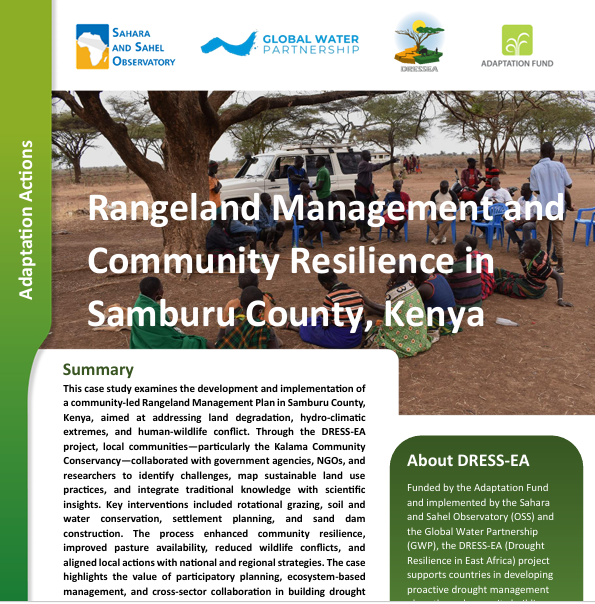
This case study examines the development and implementation of a community-led Rangeland Management Plan in Samburu County, Kenya, to address land degradation, extreme weather events, and human-wildlife conflict. Through the DRESS-EA project, the Kalama Community Conservancy partnered with government agencies, NGOs, and researchers to combine traditional knowledge with scientific approaches for sustainable land management. Key interventions included rotational grazing, soil and water conservation, settlement planning, and sand dam construction.
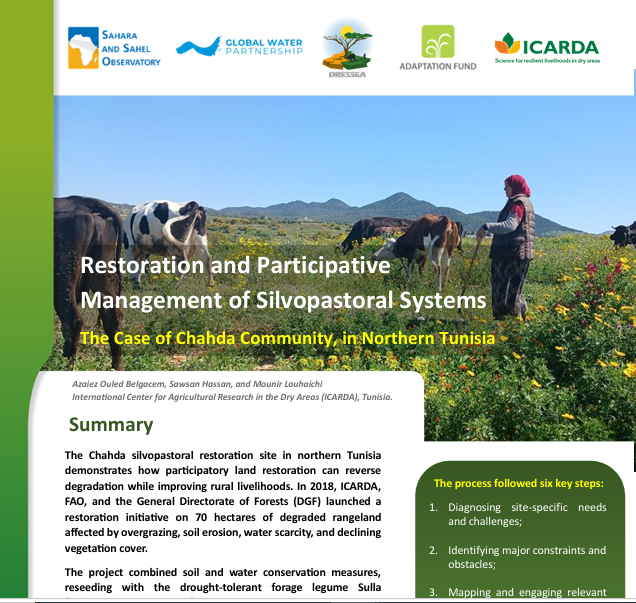
This case study highlights the successful restoration of the Chahda silvopastoral system in northern Tunisia through a participatory, climate-smart approach led by ICARDA in partnership with FAO and the General Directorate of Forests. By combining ecosystem restoration, sustainable grazing, soil and water conservation, and strong community engagement, the initiative transformed 70 hectares of degraded rangeland into a productive and resilient landscape. The project significantly increased biomass production, vegetation cover, biodiversity, and livestock productivity while strengthening local livelihoods and community governance, providing a scalable model for climate-resilient land restoration across Tunisia’s drylands.