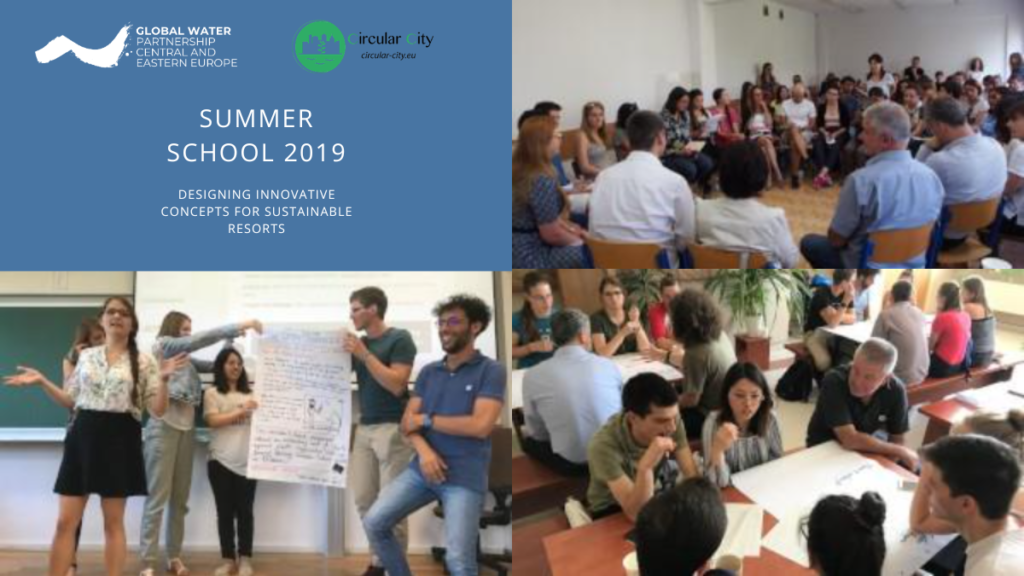
Designing Innovative Concepts for Sustainable Resorts
From 18–28 June 2019, the Summer School “When the Stakes Are High: Water Engineering and Global Diplomacy for Sustainable Cities – Decentralized Sanitation, Recycling and Zero-Waste Concepts” took place in Piran, Slovenia. The ten-day program brought together young professionals to explore ecological water management solutions for water-scarce regions and tourism-intensive areas.
“When the Stakes Are High: Water Engineering and Global Diplomacy for Sustainable Cities – Decentralized Sanitation, Recycling and Zero-Waste Concepts”
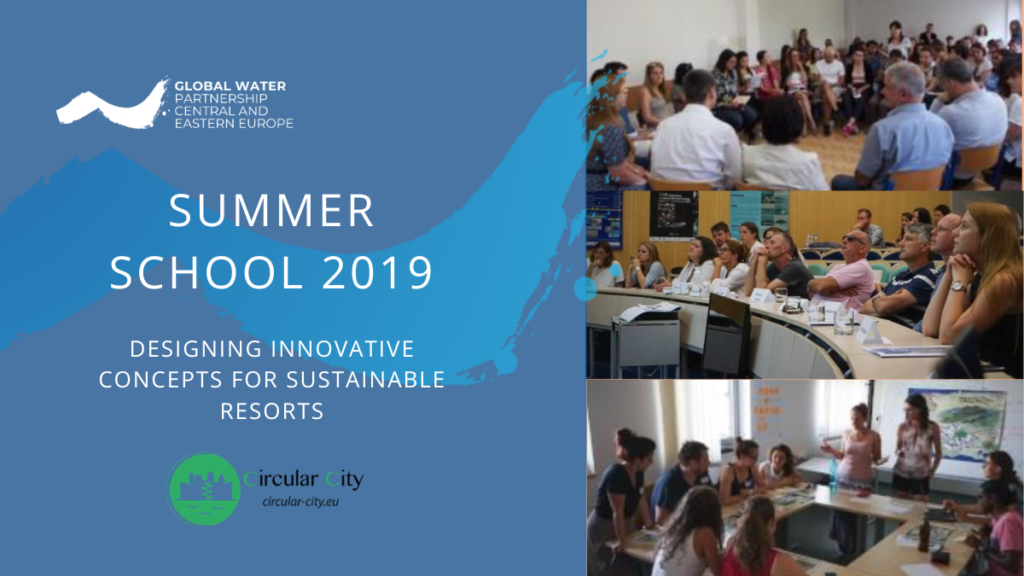
The Summer School was jointly organized by Global Water Partnership Central and Eastern Europe (GWP CEE), the University of Ljubljana (UL), Zurich University of Applied Sciences (ZHAW), and COST Action Circular City. The event welcomed 34 MSc and PhD students from 14 countries, representing diverse backgrounds including natural sciences, engineering, geography, environmental law, and social sciences.
Thematic Focus
The program addressed socio-economic, technical, environmental, and health aspects of decentralized wastewater treatment and ecological sanitation systems. Participants explored how resource reuse—particularly water and nutrients from wastewater—can support sustainable resource management in tourism-heavy areas while addressing environmental and health risks.
Lecturers from ten institutions guided participants through key topics such as:
- Decentralized sanitation and wastewater treatment systems
- Resource recovery and recycling
- Integrated Water Resources Management (IWRM)
- Water governance and stakeholder engagement
- Sustainable tourism and water-scarce environments
Problem-Based Learning and Hands-on Experience
The Summer School applied an innovative Problem-Based Learning (PBL) methodology, encouraging participants to develop autonomy, initiative, and collaborative skills. The approach combined theoretical lectures with practical assignments.
Participants visited resort facilities in Piran to observe wastewater management practices and collect data. Based on their findings, they were tasked with designing innovative concepts for next-generation sustainable resorts, integrating circular economy principles, zero-waste approaches, and decentralized sanitation solutions.
Field trips complemented the learning experience, including visits to:
- Sečovlje Saltworks
- Dragonja river landfill
- Ajdovščina wastewater treatment plant
- Škocjan Caves
These visits demonstrated successful implementation of green technologies and innovative environmental management practices.
Bridging Science and Policy
The program culminated in a Stakeholder Dialogue, where participants presented their proposed solutions to representatives from ministries, municipalities, the private sector, water utilities, academia, and intergovernmental organizations.
The dialogue fostered exchange between young professionals and decision-makers, highlighting the importance of strengthening communication between research and policy. Discussions emphasized the need for intergenerational collaboration and knowledge exchange to support sustainable water management solutions.
About the GWP CEE Summer School
The GWP CEE Summer School is a flagship youth initiative that combines interdisciplinary learning, problem-based methodology, and stakeholder engagement. The 2019 edition demonstrated how collaboration between science, policy, and practice can lead to innovative approaches for sustainable cities and tourism destinations.
Explore More
Explore More